close
Choose Your Site
Global
Social Media
Views: 0 Author: Site Editor Publish Time: 2026-07-15 Origin: Site


Fire-resistant curtains serve as critical life-safety and property-protection systems in modern architecture. They rely completely on the structural and thermal integrity of the base textile under extreme stress. Choosing the right material is not just a regulatory checkbox. It actively saves lives and shields infrastructure. Procurement teams and engineers face a fragmented market of textiles claiming robust fire resistance. Minor variations in weave, weight, or coating often lead to catastrophic failure or non-compliance during unexpected deployments. Navigating these options requires deep technical clarity. This guide strips away marketing noise to provide a rigorous, engineering-focused framework. You will learn how to evaluate and source materials designed specifically for commercial and industrial fire containment. We will walk you through core physics, critical evaluation dimensions, and essential compliance standards to ensure your next specification is foolproof.
Application Dictates Specification: Baseline fiberglass resists heat, but achieving true fire and smoke containment requires specific performance coatings (like dual-sided silicone).
Fabrication Realities Matter: A high-performing industrial fiberglass roll must not only survive heat but also resist fraying, tearing, and degradation during the OEM cutting and sewing processes.
Compliance is Binary: Material selection must align strictly with recognized safety standards (e.g., UL, ASTM, EN) supported by verifiable batch-testing data.
Understanding the fundamental behavior of textiles under extreme heat is essential. Base materials behave differently when exposed to direct flames versus ambient high temperatures. Evaluating a fiberglass sheet for curtain manufacturing starts with basic thermodynamics.
E-glass fiberglass represents the industry standard for fire barrier base materials. It features inherently non-combustible properties. The raw glass filaments handle continuous operating temperatures up to 1000°F (540°C). They maintain structural integrity well beyond the melting point of standard synthetic fabrics. However, thermal tolerance alone does not guarantee safety. The fabric must remain physically intact while shielding the unexposed side from radiant heat.
Engineers must carefully distinguish between flame restriction and smoke containment. A raw, uncoated fiberglass weave easily restricts active flames. Unfortunately, it remains highly porous. Toxic smoke causes the vast majority of fire-related casualties. Smoke easily penetrates bare woven glass. True smoke containment requires specialized, impermeable barriers applied directly to the textile. These barrier coatings seal the microscopic gaps between the warp and weft yarns.
Skeptical buyers understand a crucial reality. No organic or synthetic material is infinitely fireproof. Materials eventually degrade, melt, or disintegrate under sustained extreme heat. You should never search for an indestructible fabric. Instead, evaluate the specific duration of resistance. Modern safety codes require materials to delay fire spread for 60, 120, or 180 minutes. This critical time window allows occupants to safely evacuate the building.
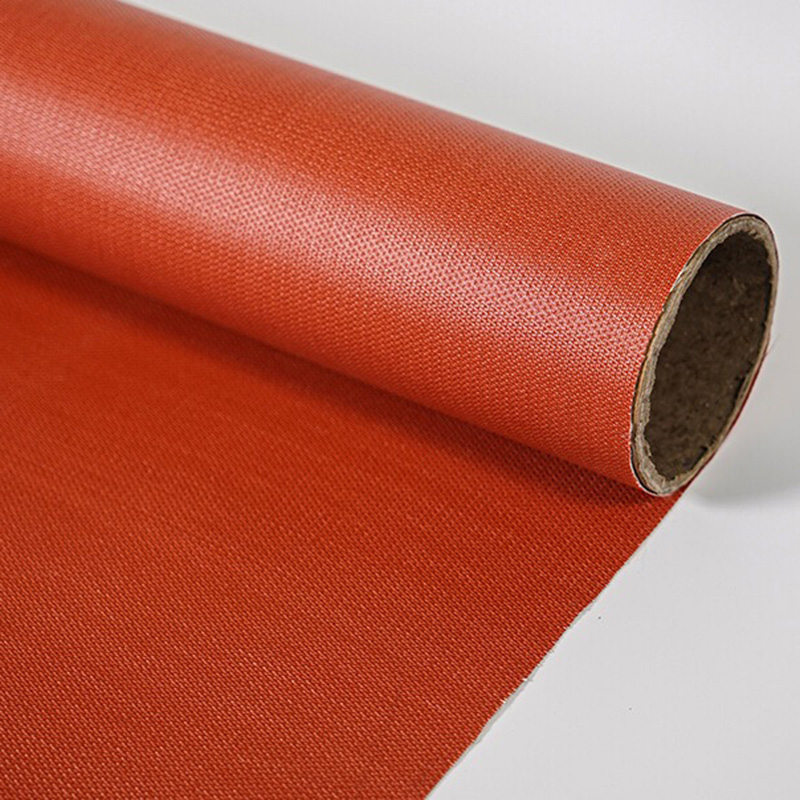
Specifying the right fire resistant fiberglass roll requires matching the coating technology to the specific deployment environment.
Loom state fiberglass comes straight from the weaving machinery without secondary chemical treatments. It offers maximum flexibility and remains highly cost-effective.
Pros: Excellent baseline heat resistance and highly economical for large volumes.
Cons: Highly porous and consistently fails rigorous smoke penetration tests. It remains susceptible to aggressive edge fraying. Workers often experience skin irritation during handling.
Best For: Internal composite layers or static thermal barriers where secondary systems handle smoke mitigation.
Silicone coatings transform raw glass fabrics into reliable life-safety barriers. Manufacturers apply liquid silicone rubber to one or both sides of the base textile.
Mechanism: Factories utilize precision knife-over-roll coating methods. They apply specific silicone weights, typically ranging from 250g to 500g per square meter.
Outcomes: The cured silicone seals the weave completely against toxic smoke. It repels water, oil, and environmental contaminants. The coating encapsulates raw glass, preventing airborne fibers. Most importantly, it drastically improves structural integrity when the curtain deploys under tension.
Specialty environments sometimes demand alternative chemical coatings. Polyurethane (PU) offers excellent abrasion resistance but risks dangerous off-gassing at lower temperatures. Vermiculite disperses heat rapidly across the fabric surface, greatly increasing the maximum temperature threshold. Neoprene provides exceptional flexibility and weather resistance for outdoor deployments. However, dual-sided silicone remains the dominant choice for indoor commercial fire barriers.
Coating Type | Smoke Mitigation | Flexibility | Off-Gassing Risk |
|---|---|---|---|
Uncoated E-Glass | Poor | High | None |
Dual-Sided Silicone | Excellent | Moderate | Low (leaves silica ash) |
Polyurethane (PU) | Good | Moderate | High at extreme heat |
Vermiculite | Moderate | Low | None |
Procurement teams must look beyond basic temperature ratings. A deployed industrial fiberglass roll must withstand severe mechanical and environmental stress.
Area Weight and Thickness: Metric weight (GSM) and imperial weight (oz/sq yd) directly impact fire ratings. However, heavier materials do not always perform better in motorized systems. Excessive thickness significantly increases the mechanical footprint of the motorized curtain housing. Overly heavy fabrics quickly strain the deployment motor, risking mechanical failure during an emergency.
Tensile and Tear Strength: You must evaluate both warp and weft durability. Fire curtains do not operate in a vacuum. During a blaze, massive pressure differentials occur. The deployed fabric must withstand aggressive building drafts, forced HVAC pressures, and human impact. Catastrophic tearing negates the entire system.
Off-Gassing and Toxicity: Consider what happens when direct flames hit the coating. Low-quality chemical coatings emit toxic, blinding fumes. These fumes can trap occupants and negate the safety benefits of the curtain itself. Premium silicone formulas leave behind a harmless silica ash residue without emitting heavy toxins.
Flex Fatigue: Fire curtains remain tightly coiled inside ceiling header boxes for years. They rarely move until testing or actual deployment. The material must never crack, stick, or degrade while stored. Poor flex fatigue resistance leads to layers sticking together, which prevents the curtain from unrolling during an emergency.
Even the best textiles fail if they cannot survive the manufacturing floor. Procuring an OEM fiberglass roll involves evaluating how the material behaves under automated industrial machinery.
Clean-cutting materials drastically improve factory throughput. Automated CNC machines and high-speed industrial lasers cut these fabrics continuously. The applied coatings must lock the base weave securely in place. If the coating is too thin, the glass yarns fray immediately upon cutting. Frayed edges jam industrial sewing machines and create unacceptable weak points along the curtain borders.
Large fire curtains require joining multiple fabric panels together. You must evaluate how well the material holds structural stitching. Manufacturers typically use high-temperature Kevlar or stainless-steel thread. The fabric must withstand extreme tension without tearing at the needle punch holes. A weak needle punch zone will rip under the curtain's own deployed weight.
Efficiency relies heavily on continuous roll lengths and standard widths. Standard widths generally include 1m, 1.2m, and 1.5m variations. Factory splices disrupt automated cutting programs and increase manual labor. High defect rates on the edges reduce the total usable yardage. You must carefully calculate these economic impacts when planning large-scale production runs.
Lives depend on your material choices. You must demand empirical proof of performance. Securing a reliable fiberglass roll sheet means validating the manufacturer's claims through independent authorities.
Always align your specifications with international safety benchmarks. Different regions require specific certifications. Common standards include:
ASTM E84: Measures surface burning characteristics, flame spread, and smoke development indices.
UL 10D: Specifies rigorous fire tests specifically designed for fire-protective curtain assemblies.
EN 1634-1 / EN 13501-1: Dictates European classifications for fire resistance and reaction to fire.
Never rely solely on glossy marketing brochures. Professional buyers must request comprehensive Technical Data Sheets (TDS) and Material Safety Data Sheets (MSDS). Furthermore, demand independent laboratory certificates. Batch-testing data proves that the specific roll you purchased matches the prototype tested in the laboratory.
Switching suppliers to save pennies introduces massive liability risks. Minor changes in chemical coating formulations can instantly void your existing UL or ASTM certifications. Establish a long-term relationship with an ISO-certified mill. Consistent quality control guarantees ongoing code compliance and protects your brand reputation in the market.
Sourcing the ultimate fiberglass material requires a careful balancing act. You must align thermal performance, mechanical durability, and manufacturing efficiency. The stakes remain incredibly high. A compromised material choice jeopardizes life safety and opens manufacturers to severe liability. By prioritizing proven coatings, evaluating tear strength, and demanding strict compliance data, you protect both building occupants and your production lines.
Before committing to bulk production, take the following actionable next steps:
Define your target fire-rating minutes and specific smoke-leakage parameters based on local building codes.
Request physical A4 material samples to test flex fatigue and edge fraying on your own factory equipment.
Demand recent, independent laboratory testing certificates from your shortlisted manufacturers.
Perform a needle-punch seam test using your standard Kevlar thread to verify tear resistance.
A: Minimum order quantities vary by manufacturer and specific coating requirements. For custom widths or proprietary silicone colors, industry standard MOQs typically range between 500 and 1,000 meters. However, purchasing standard 1-meter or 1.5-meter widths in standard grey often lowers the MOQ to just a few standard rolls.
A: No. While liquid silicone burns away at much lower temperatures than glass melts, it does not fuel the fire. High-quality silicone degrades into a harmless silica ash. This ash residue remains on the fabric and does not compromise the underlying non-combustible structure of the E-glass.
A: Use double-sided coatings for automated motorized curtains. The dual coating balances rolling friction, prevents fabric sticking in the header box, and encapsulates fibers perfectly. Single-sided coatings work best for static fire barriers or highly specialized dual-layer assemblies where weight reduction is critical.
A: Generally, no. Heavy-duty industrial rolls prioritize thick, opaque barrier coatings for maximum smoke and fire containment. They block light completely. Residential sheer applications require lightweight, translucent fabrics designed primarily for aesthetics and basic flame retardancy, not heavy smoke mitigation.