close
Choose Your Site
Global
Social Media
Views: 0 Author: Site Editor Publish Time: 2026-07-12 Origin: Site


Unmanaged heat in boiler systems severely drains industrial efficiency. It forces mechanical equipment to work harder to maintain baseline processes. Furthermore, leaking radiant heat elevates ambient plant temperatures to highly dangerous levels for personnel.
Older facilities historically relied on hazardous materials like asbestos to control these extreme temperatures. Today, modern industrial operations replace these outdated solutions using safe, highly engineered alternatives. boiler fiberglass tape serves as a critical component in this modern insulation architecture. It effectively seals irregular gaps, wraps pipe joints, and secures primary bulk insulation layers without introducing health hazards.
You will learn how to properly evaluate, select, and implement fiberglass insulation tapes for complex commercial and industrial boilers. We provide engineers, facility managers, and procurement officers an objective, technically grounded framework. This guide simplifies complex thermal challenges into actionable specification guidelines.
Standard E-glass fiberglass tapes maintain structural integrity up to 450°C–540°C (840°F–1000°F), though adhesive backings will typically burn off at much lower temperatures.
Material selection (woven, coated, or aluminum foil composite) must align with the specific exposure risks (radiant heat, abrasion, or moisture) of the boiler or steam pipe.
For maximum thermal efficiency and safety, proper installation requires calculated overlap (typically 50%) and mechanical fastening rather than relying solely on pressure-sensitive adhesives.
Sourcing OEM boiler fiberglass requires verifying non-combustibility standards and asbestos-free compliance to mitigate regulatory and liability risks.
Poor thermal management creates cascading operational problems across industrial facilities. You can easily spot these issues through poorly sealed boiler doors, bare steam pipes, and unprotected exhaust chimneys. Every uninsulated surface leaks valuable process heat into the surrounding environment. This thermal leakage directly reduces overall system efficiency. Additionally, exposed high-temperature surfaces create severe burn hazards for maintenance personnel working nearby.
To successfully solve these problems, a boiler insulation wrap must meet three strict performance criteria.
Thermal retention: The material must deliver a measurable reduction in exterior surface temperatures. By containing heat within the system, you maintain the desired internal process temperature much more consistently.
Durability: The wrap must resist brutal operational conditions. It will face constant thermal cycling as boilers fire up and cool down. It must also withstand engine vibration and localized physical abrasion from nearby moving parts.
Safety: Materials must ensure strict compliance with modern occupational health standards. They must be certified 100% asbestos-free to protect worker lung health and satisfy regulatory inspections.
You should view fiberglass tape as one specialized part of a larger insulation ecosystem. Engineers do not use it to cover massive, flat boiler walls. Instead, they deploy it for highly localized wrapping. It excels at sealing irregular mechanical joints, wrapping tight steam lines, and securing thick primary insulation blankets into place. Establishing this baseline understanding prevents misapplication during the maintenance phase.
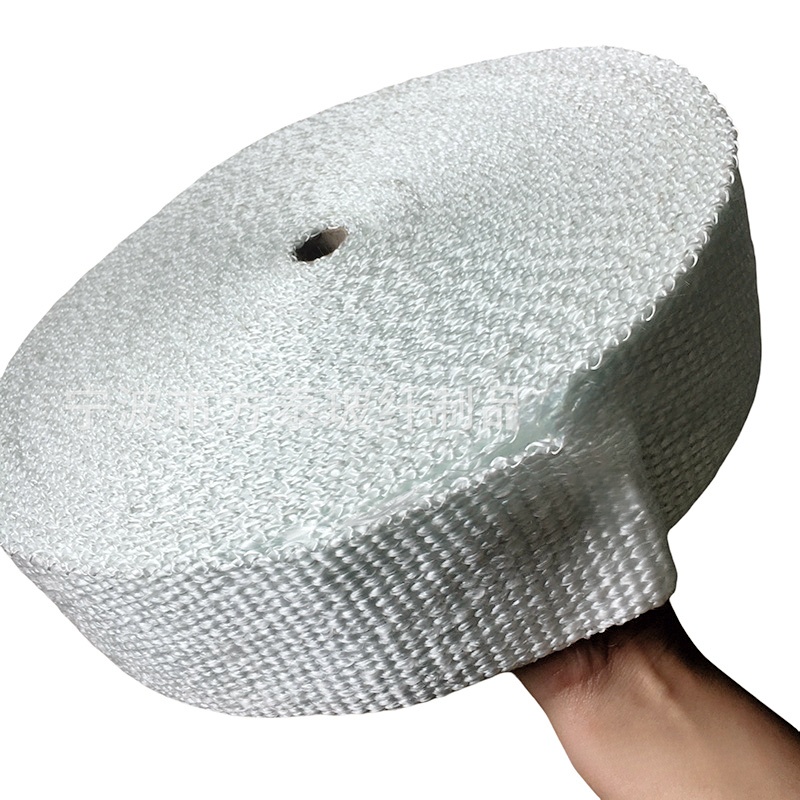
Selecting the correct material profile requires understanding your specific environmental hazards. The industrial market categorizes high temperature fiberglass tape into three primary variants. Each variant solves a distinct mechanical or thermal problem.
This is the industry standard. It features highly flexible, untreated E-glass yarns woven into a tight strip. Because it lacks rigid coatings, it remains extremely pliable.
We highly recommend plain woven styles for tight radius wrapping on complex steam pipes. It also performs exceptionally well for basic boiler door sealing applications. Use this material in controlled zones where physical abrasion remains minimal.
This variant combines a durable fiberglass base fabric with a reflective outer aluminum layer. The metal layer fundamentally changes how the tape handles heat.
It excels at radiant heat reflection. When you place it near intense heat sources, the foil bounces infrared energy away from underlying sensitive components. Furthermore, the foil acts as a robust vapor barrier. We recommend this profile for exposed environments where you must protect insulation from steam or ambient humidity.
Manufacturers treat these tapes with specialized compounds to alter their physical properties. Silicone coatings block moisture and prevent the fiberglass edges from fraying during installation. Vermiculite coatings actively increase the material's temporary peak temperature resistance.
You should deploy coated tapes in high-abrasion areas. They also perform brilliantly in environments exposed to aggressive oil drips or chemical splashing, as the coating prevents dangerous fluid absorption.
Material Categorization Matrix
Tape Variant | Primary Feature | Ideal Application Zone | Key Limitation |
|---|---|---|---|
Plain Woven E-Glass | Maximum flexibility and tight conformability | Steam pipes, irregular flanges, door seals | Can fray; easily absorbs liquids |
Aluminum Foil Laminated | Radiant heat reflection and moisture block | Exhaust systems, high-humidity rooms | Less flexible; foil can tear under abrasion |
Silicone/Vermiculite Coated | Abrasion resistance and peak temp boosts | Oil-exposed zones, high-friction joints | Higher initial cost; reduced flexibility |
Engineers often make critical errors by misinterpreting manufacturer specifications. You must evaluate these materials based on industrial realities rather than laboratory ideals.
You must clearly differentiate between the base fabric temperature limit and the adhesive temperature limit. The core E-glass fabric easily tolerates continuous exposure up to 540°C. However, the pressure-sensitive acrylic or silicone adhesives applied to the back will almost always degrade between 150°C and 200°C.
Adhesives exist primarily for installation convenience. They hold the material securely in place while the technician completes the wrapping process. You should never rely on adhesives for long-term structural holding in peak-temperature zones. Once the boiler reaches operating temperature, the adhesive will fail. The structural integrity must rely entirely on the mechanical wrapping method.
Tape thickness directly impacts thermal performance and workability. Thicker materials, such as 1/8" or 1/16" profiles, offer superior thermal bridging resistance. They trap more dead air, which slows heat transfer. However, thicker tapes inherently possess lower conformability. They struggle to wrap tightly around small, complex flanges.
Conversely, weave density affects heat bleed. Tighter weaves reduce the microscopic gaps where heat can escape. Unfortunately, high-density weaves feel stiffer in the technician's hands. They require more physical effort to manipulate during tight installations. You must carefully balance thickness and density against the physical layout of your boiler components.
Industrial boilers generate constant, low-frequency vibration. Over months of operation, this vibration creates intense mechanical stress. You must evaluate how the tape handles this stress alongside natural thermal expansion. As the metal pipes heat up, they expand. The tape must possess enough tensile strength to stretch slightly without snapping. If the material lacks sufficient tensile strength, it will inevitably split at the seams during standard thermal cycling.
Even the highest-grade materials fail when installed incorrectly. Understanding the practical realities of the boiler room prevents catastrophic insulation failures.
New installations frequently alarm untrained personnel during the first firing sequence. Users must anticipate an initial off-gassing phase. When the boiler pipe heats up, the manufacturer's sizing agents and the tape's adhesive backing will physically burn off. This process generates visible smoke and a distinct odor.
You should establish proper cross-ventilation in the facility during initial commissioning. Inform facility operators about this harmless burn-off phase to prevent unnecessary panic or false fire alarms.
Applying the tape requires precise geometric overlap. Randomly wrapping a steam pipe guarantees thermal leakage. Follow a strict, calculated approach to ensure uniform protection.
Clean the substrate: Remove all loose rust, oil, and old insulation debris from the pipe surface.
Establish the anchor: Complete one full, straight circumferential wrap before angling the spool.
Maintain 50% overlap: Angle the spool and begin spiraling down the pipe. Overlap exactly half of the previous layer's width on every pass.
Apply consistent tension: Pull the material tightly as you wrap to eliminate underlying air pockets.
Terminate securely: Finish with one straight circumferential wrap, cutting the end cleanly.
The 50% spiral overlap ensures a consistent double-layer of thermal protection. Crucially, it prevents structural gaps from forming as the underlying metal pipe expands during heat cycles.
Because adhesives inevitably burn away, you must secure the terminal ends of the wrap mechanically. We strongly recommend using stainless steel banding, heavy-duty wire ties, or high-temp hose clamps. Place these fasteners at the very beginning and the absolute end of the wrapped section. This mechanical clamping prevents the entire fiberglass spool from unravelling onto the floor after the underlying adhesive turns to ash.
Untreated plain woven fiberglass behaves like a sponge. It will actively wick ambient oils, maintenance fluids, or moisture. Water absorption instantly destroys the material's insulating properties, as water conducts heat efficiently. More dangerously, if the untreated tape absorbs combustible hydraulic fluids or lubricating oils, the insulation itself becomes a massive fire hazard. If your boiler environment features fluid drip risks, you must upgrade to a coated variant.
Procuring reliable thermal materials requires moving past marketing jargon. You must source OEM boiler fiberglass from vendors who understand strict industrial compliance.
Evaluate potential vendors based on their formatting capabilities. Different maintenance teams require different physical dimensions. A single repair technician might need a standard 30-meter roll for their toolbag. Conversely, a large manufacturing facility overhauling a central plant might require heavy-duty 2.5kg industrial spools. If you operate an assembly line producing modular boilers, you will need custom die-cut lengths. Ensure your chosen supplier can scale their packaging to match your operational rhythm.
Never purchase a heat resistant tape without demanding comprehensive documentation. You must request up-to-date Material Safety Data Sheets (MSDS) and Technical Data Sheets (TDS). These documents verify compliance with recognized engineering standards. Look specifically for ASTM standard testing regarding thermal conductivity and non-combustibility. This paper trail protects your facility during safety audits and mitigates future liability risks.
Shortlist suppliers who provide clear, verifiable data. Trustworthy manufacturers clearly separate their continuous operating temperature limits from their short-term excursion limits. Reject suppliers who rely on vague, exaggerated marketing claims like "completely fireproof." True industrial OEM partners speak in exact degrees Celsius and measurable tensile strengths.
Before executing a bulk procurement order, request physical sample rolls. Distribute these samples to your maintenance team for in-house thermal testing. Have them perform a trial installation on a non-critical, low-pressure steam line. This physical test allows your team to evaluate the tape's conformability, thickness, and handling characteristics under real-world facility conditions.
The right industrial tape balances theoretical thermal limits against raw installation realities. By understanding the distinct differences between plain woven, foil-laminated, and coated materials, you can match the exact product to your specific boiler hazards.
To successfully integrate these materials into your facility, keep these core actions in mind:
Always prioritize mechanical fastening over adhesives for long-term holds.
Enforce a strict 50% overlap rule during installation to prevent heat gaps.
Demand verifiable TDS and MSDS documentation from all prospective OEM suppliers.
Account for the initial burn-off phase during system commissioning.
Do not leave your thermal management to guesswork. Consult directly with an application engineer to review your specific boiler operating temperatures. Request comprehensive technical data sheets for your short-listed materials today to begin upgrading your facility's safety and efficiency.
A: Standard E-glass woven tape typically handles continuous operating temperatures up to 450°C–540°C (840°F–1000°F). However, any adhesive backing will degrade at much lower temperatures.
A: Yes. It is frequently used to wrap steam pipes and seal chimney joints to protect personnel and retain system heat, provided the surface temperatures do not exceed the base material's limits.
A: A heat resistant tape is specifically formatted (narrow width, finished edges, often self-adhesive) for tight wrapping and localized sealing, whereas blanket insulation is used for broad surface coverage.
A: Yes, modern industrial fiberglass is 100% asbestos-free. However, it can still cause mild mechanical skin irritation during installation, so wearing standard PPE (gloves, long sleeves, safety glasses) is always recommended.