close
Choose Your Site
Global
Social Media
Views: 0 Author: Site Editor Publish Time: 2026-07-10 Origin: Site


Industrial facilities operate under extreme environmental conditions daily. Intense heat and abrasive hazards pose constant threats to equipment and personnel. Reliable thermal insulation materials must balance flexibility and durability perfectly. They need to endure extreme heat without suffering premature degradation.
Specifying an incorrect material often leads to sudden equipment failure. These unexpected failures trigger severe safety hazards across the plant floor. They also cause immediate compliance violations under strict OSHA and NFPA regulations. Maintenance teams subsequently face endless cycles of replacing failed insulation components.
We will provide engineering and procurement teams a clear evaluation framework. You will learn how to assess structural variations and stringent compliance standards. This guide ensures you select the optimal protective materials for your application. It helps you protect critical infrastructure while maintaining peak operational safety.
Baseline Limits: Standard silicone coated fiberglass fabric sustains continuous operating temperatures up to 500°F (260°C) while providing superior resistance to abrasion and environmental wear.
Configuration Matters: Choosing between single-sided and double side silicone coating depends entirely on the application (e.g., pipe lagging vs. welding curtains).
Alternative Benchmarking: While PTFE offers lower friction, silicone coatings provide superior flexibility, water resistance, and cost-efficiency for general high-heat insulation.
Supplier Diligence: Sourcing reliable OEM silicone fiberglass requires verifying batch consistency, precise fabric weight (e.g., standard 17-oz vs. heavy-duty 32-oz), and independent compliance testing (ASTM/UL).
Understanding core material mechanics reveals why these fabrics perform exceptionally well. The underlying fiberglass base provides essential structural integrity. It also delivers robust thermal insulation against radiant heat. The silicone rubber coating completely encapsulates these vulnerable fibers. This thick protective layer prevents fraying during intensive handling. It blocks moisture penetration effectively. It also resists oil and harsh chemical spills commonly found in industrial plants. Deploying premium silicone coated fiberglass fabric creates a highly reliable protective barrier.
Thermal tolerance metrics require careful examination before installation. You must differentiate between continuous operating temperatures and short-term peaks. Continuous operation usually handles around 500°F (260°C) safely. Short-term peak excursions can exceed this limit temporarily. However, thermal degradation occurs gradually over time. Setting realistic lifespan expectations prevents unexpected field failures. The outer silicone layer may eventually ash at extremely high temperatures. The underlying fiberglass mesh continues providing essential thermal protection.
Mechanical properties dictate long-term physical survivability. Abrasion resistance ensures longevity in high-traffic maintenance zones. High puncture strength protects against sharp tools or protruding equipment edges. Flexibility remains absolutely critical for complex industrial geometries. Maintenance teams frequently wrap highly irregular shapes. Valves, flanges, and tight pipe corners require pliable, yielding materials. The silicone layer maintains elasticity even after prolonged heat exposure.
Selecting the right coating configuration directly impacts field performance. Single-sided variations leave one fiberglass face completely exposed. Manufacturers apply the heavy elastomer exclusively to the exterior face.
Single-sided fabrics excel in creating removable insulation blankets. They perform exceptionally well in tight pipe lagging applications. One side often must bond securely using specialized industrial adhesives. Sometimes the uncoated side must face a specific internal dry environment. It offers lighter overall weight. It proves highly effective for static internal insulation wrapping.
Conversely, dual-coated fabrics encapsulate the core entirely. Splash curtains and heavy expansion joints rely heavily on this configuration. These dynamic environments expose materials to multidirectional environmental hazards. Flying sparks, molten metal splash, and harsh weather threaten equipment daily. Utilizing a double side silicone coating provides absolute maximum durability. It seals the fragile core from all external contaminants. It also allows reversible use during routine maintenance cycles.
Feature Focus | Single-Sided Coating | Double-Sided Coating |
|---|---|---|
Best Application | Pipe lagging, removable jackets | Welding blankets, expansion joints |
Environmental Protection | Unidirectional barrier | Omnidirectional sealing |
Flexibility | Highly pliable, easy wrapping | Moderately stiff, heavily reinforced |
Weight Profile | Lighter, easier to maneuver | Heavier, maximum physical durability |
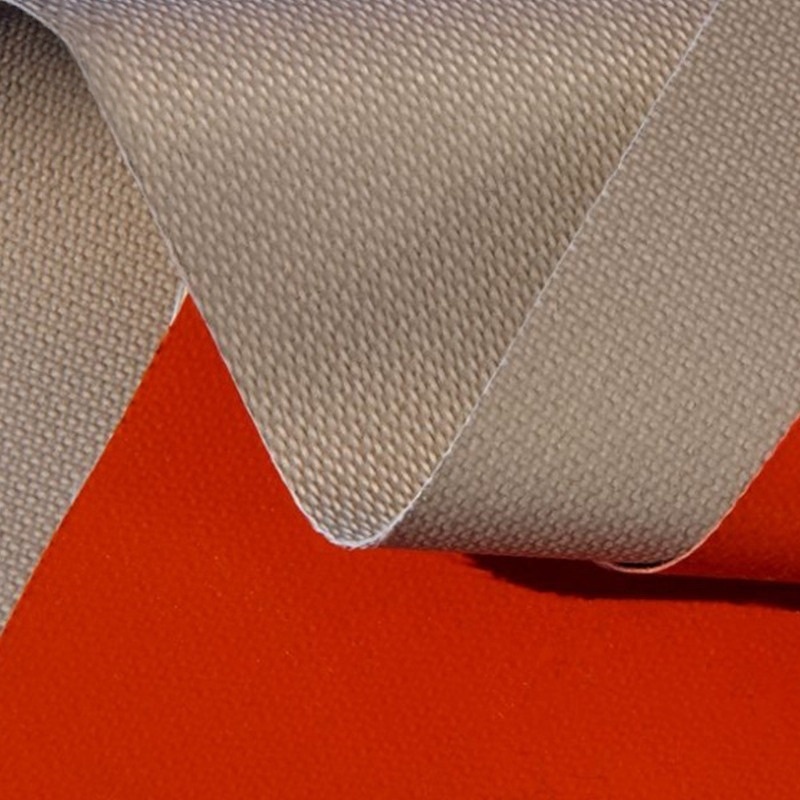
Comparing base materials helps engineers optimize their protection strategies. Uncoated fiberglass handles much higher raw heat initially. It is generally easier to source for basic needs. However, it fails rapidly in active industrial settings. Unprotected fibers absorb moisture quickly. They fray heavily upon cutting or rough handling. They also cause severe skin irritation for maintenance workers. Mechanical dermatitis slows down installation significantly.
Engineers frequently compare silicone options directly against PTFE (Teflon) variants. Each material possesses distinct operational advantages.
Choose PTFE when: Extreme chemical resistance remains strictly mandatory. Food-grade compliance dictates surface material choices. Zero-friction sliding surfaces are absolutely required for moving parts.
Choose Silicone when: Extreme flexibility drives the installation process. Heavy weatherproofing and moisture blocking are primary goals. Non-slip textures aid physical handling.
Thoroughly evaluate your specific hazard before choosing. High-quality silicone coated fiberglass often proves vastly more adaptable. It serves as an incredibly effective general-purpose industrial barrier.
Weight and thickness considerations govern physical endurance. Specify a 32-oz heavy-duty fabric for extreme molten splash zones. A standard 15-oz fabric works perfectly for basic thermal jackets. Match the fabric weight directly to the specific hazard intensity. Over-specifying adds unnecessary rigidity. Under-specifying leads to rapid physical deterioration.
Industry certifications validate performance claims objectively. Procurement teams must demand comprehensive documentation upfront. Request UL ratings to establish baseline fire safety. Check current ASTM testing standards rigorously. ASTM E84 tests for flame spread and smoke development characteristics. NFPA standards dictate strict fire protection requirements across facilities. Proper certifications ensure complete regulatory alignment during safety audits.
Workplace safety remains paramount across heavy manufacturing sectors. Raw fiberglass materials inevitably release airborne microscopic particulates. These tiny particulates pose serious respiratory hazards over time. Encapsulating the raw fibers eliminates this risk entirely. It significantly improves overall worker safety. Compliance during daily installation becomes much easier to manage. OSHA strictly monitors airborne fiber levels continuously. Procuring certified industrial high-temp fabric mitigates these occupational risks completely.
Environmental resistance drastically extends outdoor usability. Harsh UV exposure degrades standard protective plastics quickly. Ambient ozone breaks down inferior rubber compounds prematurely. High-quality elastomer coatings resist both UV and ozone effectively. Water resistance metrics dictate outdoor performance reliability. Rain, sleet, and heavy humidity will not compromise the encapsulated core.
Fabrication presents distinct mechanical challenges during initial assembly. Cutting and sewing require specialized industrial techniques. The elastomer encapsulation successfully prevents extensive edge unraveling. However, sealing the cut edges ensures long-term structural integrity. Manufacturers must use Kevlar or PTFE high-temp threads exclusively. Standard threads simply burn away rapidly under thermal load. This causes catastrophic seam failure long before the actual fabric degrades.
Environmental degradation requires careful field monitoring. You must identify local conditions causing rapid material failure. Prolonged exposure to highly aggressive solvents compromises the barrier. Heavy steam pressures exceeding standard limits destroy the outer coating. Maintenance teams must recognize these absolute environmental limits clearly. Avoiding these specific triggers extends material life exponentially.
Evaluating long-term operational durability transforms standard procurement strategies. Shift your focus toward tracking replacement frequency carefully. Documenting actual maintenance downtime reveals true operational efficiency. Frequent physical replacements usually indicate an incorrect material specification. Extending the lifespan of your protective covers reduces facility downtime heavily. Maximizing continuous uptime remains the ultimate goal.
Assess manufacturing volume capabilities and customization options thoroughly. Facilities often require custom fabric widths to minimize waste. Specific color-coding aids rapid safety identification across piping networks. Custom coating weights match precise environmental hazards perfectly. A highly capable OEM silicone fiberglass supplier adapts to these specific needs seamlessly.
Quality assurance separates premium suppliers from average distributors. Evaluate their internal quality control processes deeply. Ask exactly how they prevent coating pinholes during manufacturing. Microscopic pinholes allow hidden moisture penetration. Verify how they maintain consistent thickness across massive production rolls. Ensure they provide proper edge sealing options upon request.
Supply chain reliability ensures uninterrupted daily operations. Confirm standard manufacturing lead times before committing large orders. Negotiate reasonable minimum order quantities (MOQs) matching your usage rate. Direct factory communication facilitates rapid technical troubleshooting. Direct manufacturing partnerships quickly eliminate frustrating intermediary delays.
Audit Customization Limits: Request sample swatches demonstrating custom colors and specific thicknesses.
Verify Testing Data: Demand independent lab reports confirming continuous temperature ratings.
Assess Sealing Methods: Check their suggested stitching patterns and high-temperature thread compatibility.
Establish Communication Lines: Ensure direct access to production engineers for troubleshooting complex fabrication issues.
Successful deployment of thermal protective barriers requires strategic planning. You must align fabric weight, coating configuration, and compliance standards perfectly. Address the specific industrial hazard accurately to prevent premature failures. Careful specification keeps personnel safe while protecting expensive infrastructure.
Audit your current insulation failure points immediately. Request updated technical data sheets (TDS) from potential manufacturing partners. Conduct thorough in-situ physical testing before finalizing bulk purchasing decisions. Taking these deliberate steps guarantees highly resilient industrial protection.
A: Yes. The heavy elastomer encapsulation firmly locks the woven glass fibers in place. This greatly prevents unraveling and fraying during cutting. It makes fabrication much easier and safer compared to handling raw, untreated fiberglass materials.
A: Yes. The fully cured outer surface is highly water and oil resistant. It acts as an impermeable barrier. This reliably protects the underlying internal insulation and equipment from rain, ambient humidity, and unexpected industrial fluid spills.
A: The outer coating will eventually ash, crack, or harden. It loses its flexibility at extreme temperatures. However, the underlying woven glass core typically remains intact. The bare core can continue providing thermal protection up to 1000°F.
A: Base your choice directly on physical abrasion risks. Use 17-oz fabrics for static thermal jackets and standard pipe wrapping. Upgrade to 32-oz heavy-duty fabrics for environments facing heavy mechanical wear, heavy foot traffic, or direct molten metal splash.