
Views: 0 Author: Site Editor Publish Time: 2026-06-10 Origin: Site


Industrial cable networks operate under grueling conditions daily. They face extreme thermal stress, constant mechanical abrasion, and high voltages. These harsh environments demand robust solutions far beyond standard vinyl or rubber options. Selecting the wrong insulation tape inevitably leads to premature dielectric failure. It also causes severe thermal degradation and creates dangerous safety hazards across critical infrastructure. When insulation fails, entire operational systems can shut down unexpectedly.
This guide offers procurement teams and electrical engineers a clear, evidence-based framework. You will learn exactly how to evaluate, specify, and implement fiberglass tape cable wrapping for high-demand electrical applications. We carefully examine core capabilities, adhesive technologies, and real-world implementation strategies. Our goal is to help you ensure safe, compliant, and durable operations in your most demanding industrial environments.
Thermal Superiority: Woven fiberglass tape consistently outperforms standard PVC, operating reliably in Class F (155°C) to Class C (220°C+) temperature zones.
Mechanical Integrity: Offers exceptional tensile strength and resists cut-through, making it a highly durable cable protection material.
Application Specificity: Ideal as transformer tape, motor coil insulation, and for high-temperature cable splicing, but requires specific adhesive pairings (e.g., thermosetting silicone) for peak performance.
Limitations: Uncoated fiberglass tape is highly porous; it is not a standalone moisture barrier and must be combined with varnishes or resins in damp environments.
Fiberglass tape relies on continuous filament E-glass fibers. E-glass stands for electrical grade glass. Manufacturers weave these ultra-fine filaments into a tight, flexible matrix. This specific composition prevents the material from melting or degrading under severe heat. Standard PVC tapes melt quickly in industrial settings. E-glass simply absorbs the thermal load.
You must understand thermal classifications to specify materials correctly. Class H insulation ensures safe continuous operation up to 180°C. Class C pushes endurance even further, handling temperatures exceeding 220°C. Fiberglass tapes naturally meet these rigorous demands. They also showcase incredible resistance to edge tearing. Extreme heat cycling causes ordinary plastics to shrink and snap. Woven glass maintains its exact dimensional stability during rapid temperature swings.
Dielectric breakdown strength is a crucial evaluation metric. Engineers typically measure this in volts per mil (V/mil). Bare fiberglass provides a solid baseline for voltage resistance. The glass fibers themselves do not conduct electricity. However, the woven structure inherently contains microscopic air gaps. Air reduces the overall dielectric ceiling.
You can dramatically improve this performance post-wrapping. Technicians often apply varnish or resin over the dry tape. This liquid impregnates the porous woven matrix. It fills every microscopic void between the glass filaments. Once cured, this solid composite barrier blocks electrical tracking. It massively increases the overall insulation resistance. This two-step process forms a nearly impenetrable dielectric shield.
Industrial routing exposes cables to constant physical abuse. Heavy machinery generates intense vibration. Metal cable trays cause harsh friction. Fiberglass excels as a primary cable protection material in these scenarios. The high tensile strength of the glass matrix stops physical damage.
It provides heavy-duty defense against abrasion and mechanical shock. Sharp edges easily slice through standard rubber insulation. Woven glass severely resists cut-through forces. This durability prevents exposed copper from touching grounded metal surfaces. You drastically reduce the risk of short circuits. It acts as physical armor for vulnerable power feeds.
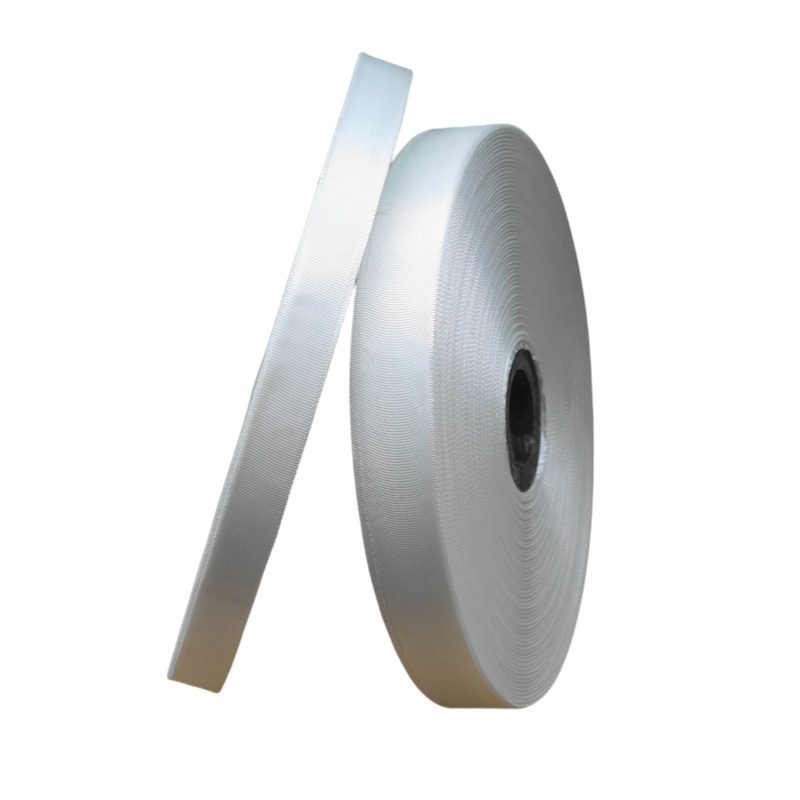
Thermosetting silicone is the premium choice for extreme environments. We recommend this adhesive for maximum continuous operating temperatures. It handles drastic temperature fluctuations effortlessly. Silicone remains fully flexible in freezing conditions. It also refuses to degrade near furnaces or industrial ovens.
The action mechanism involves heat curing. Once you apply the tape, operating heat actually strengthens the bond. The silicone cures into a permanent, solvent-resistant layer. It fuses the glass wraps together securely. You cannot easily peel it off after curing. This creates a highly reliable, long-lasting insulation jacket.
Acrylic adhesives offer excellent physical wear resistance. They operate perfectly at moderate to high temperatures. You can safely use them up to 155°C (Class F). Acrylic forms a very strong, instant bond on clean surfaces.
This option is best for environments facing chemical exposure. Acrylic resists industrial solvents, machine oils, and cleaning fluids. Silicone can sometimes swell when exposed to certain petrochemicals. Acrylic ignores these aggressive fluids entirely. It keeps the fiberglass firmly anchored during heavy mechanical vibration.
Rubber-resin formulas provide high initial tack. They stick aggressively the moment you apply them. This makes installation very fast. It helps technicians wrap complex wire harnesses quickly.
We suggest rubber-resin for lower-cost applications. Thermal requirements must remain strictly below 130°C. If temperatures exceed this limit, the rubber degrades. It turns brittle and eventually fails. For standard indoor industrial panels, it works perfectly. It offers a highly economical fastening solution.
Some applications strictly prohibit adhesives. Adhesives can burn off and contaminate sensitive components. In these cases, you need dry fiberglass wrapping tape. It relies entirely on mechanical tension during installation.
This dry format is best for motor winding repairs. Technicians wrap the bare coils tightly. Afterward, they dip the entire assembly into a varnish tank. They might also use resin potting techniques. The liquid resin penetrates the dry glass completely. It forms a solid, monolithic insulation block.
Motors and generators spin at terrifying speeds. Centrifugal forces try to tear internal wiring apart. Engineers use fiberglass tape for banding armatures safely. The high tensile strength holds the coils firmly in place.
It also insulates field coils perfectly. Heat builds up rapidly inside sealed motor housings. Rubber melts and causes catastrophic phase-to-phase shorts. Glass wrapping ignores the heat. It keeps the critical windings separated and secure under heavy mechanical loads.
Transformers step voltages up or down continuously. This induction process generates massive amounts of thermal energy. Liquid-filled transformers use oil for cooling. Dry-type units rely entirely on ambient air. They require specialized transformer tape.
Fiberglass serves as superior interlayer insulation here. It separates the primary and secondary copper windings. It also wraps the outer lead connections. The porous nature actually aids heat dissipation. Trapped heat destroys transformer efficiency. Glass allows thermal energy to radiate outward safely.
Metallurgy plants and glass manufacturing facilities operate extreme equipment. Industrial furnaces radiate intense infrared heat. Power feeds running near these zones face constant danger. Standard wire jackets turn to ash quickly.
Technicians use fiberglass for furnace cable splicing. They wrap the spliced joints heavily. This creates a localized thermal barrier. The glass reflects and absorbs the ambient furnace heat. It protects the sensitive copper joints inside. This practice prevents sudden power losses during critical smelting operations.
Underground manholes and overhead cable trays pack power lines tightly. A failure in one high-voltage line creates a massive plasma arc. This arc can instantly ignite neighboring cables. Cascading arc failures destroy entire electrical grids.
Wrapping high-voltage power cables prevents this disaster. The glass matrix suffocates potential fires. It contains the explosive plasma energy locally. If a fault occurs, the fiberglass shield takes the blast. It protects the adjacent infrastructure from catching fire. This containment strategy saves facilities millions in collateral damage.
Selecting the optimal material requires strict comparison. Procurement teams must weigh mechanical strength against chemical resistance. The following table highlights the core differences between major electrical tapes.
Material Type | Mechanical Strength | Moisture Resistance | Max Temperature Limit | Relative Cost |
|---|---|---|---|---|
Fiberglass Tape | Excellent (High Tensile) | Low (Requires Varnish) | 220°C+ (Up to 600°C for base glass) | Moderate |
Silicone Rubber Tape | Low (Prone to Cut-through) | Excellent (Self-Fusing) | 200°C - 260°C | High |
Mica Tape | Poor (Highly Brittle) | Moderate | 800°C+ (Fire Survival) | High |
PTFE (Teflon) Tape | Moderate | Excellent (Chemical Proof) | 260°C | Very High |
Fiberglass provides significantly better mechanical strength. It actively resists abrasion and physical scraping. However, it lacks inherent moisture sealing capabilities. Water can seep through the woven glass grid.
Silicone rubber tape fuses to itself chemically. This creates a perfectly watertight, solid rubber sleeve. It boasts superior moisture and corona resistance. Unfortunately, silicone is highly vulnerable to mechanical cut-through. A sharp metal edge will slice right through it. You must evaluate whether moisture or physical damage poses the greater risk.
Mica tape contains actual mineral flakes. These flakes provide superior fire-survival characteristics. Mica can withstand 800°C or more. We rely on it for critical emergency circuits. Fire alarms and emergency lighting need mica to survive building fires.
However, mica is incredibly brittle. It flakes and snaps when bent around tight corners. Fiberglass tape is highly flexible. It applies easily on complex geometries. Glass wrapping conforms to sharp angles without breaking. You should choose glass for complex mechanical shapes.
PTFE tape delivers absolute chemical resistance. It ignores harsh acids, caustic bases, and aggressive solvents. It also features a famously low coefficient of friction. Wires wrapped in PTFE slide easily through tight conduits.
Fiberglass offers higher tensile strength than PTFE. It locks joints together more rigidly. Glass also maintains a significantly lower cost profile. PTFE commands a premium price. You should reserve PTFE only for severe chemical environments. For pure high-temperature mechanical strength, fiberglass wins.
Proper installation dictates final performance. You must apply the tape with consistent, firm tension. Loose wraps create air pockets. Air pockets severely degrade dielectric strength. We mandate a standard 50% overlap technique. Technicians call this a half-lap wrap. It ensures uniform dielectric coverage across the entire cable joint.
Surface preparation is equally critical. You must clean cables thoroughly before application. Remove all grease, machine oils, and debris. Adhesives fail on dirty surfaces. Thermosetting silicone is especially sensitive to oil contamination. Wipe the splice area with an approved industrial solvent first. Let it dry completely before wrapping.
Handling woven glass requires specific precautions. The most common issue is fraying. When you cut the tape, the ends immediately unravel. You require sharp, proper cutting tools to make clean cuts. You must also secure the cut end immediately. Press it firmly into the adhesive layer below it to stop fraying.
Occupational handling risks exist. High-volume wrapping exposes skin to microscopic glass shards. This causes minor, yet annoying, skin irritation. We strongly recommend proper PPE. Technicians must wear lightweight, coated gloves. Long sleeves help protect forearms during extensive installation sessions.
Procurement teams must verify specific safety standards. Never buy unrated electrical insulation tape. Ensure the product explicitly meets UL 510 requirements. This is the Standard for Polyvinyl Chloride, Polyethylene, and Rubber Insulating Tape. It includes strict flame retardancy tests. Equivalent IEC standards are acceptable in European markets.
You must also check for environmental compliance. Look for RoHS and REACH certifications. These standards verify the absence of hazardous heavy metals and toxic chemicals. Verifying these documents ensures environmental safety. It also protects your company from sudden regulatory fines.
Fiberglass tape remains the optimal choice for brutal industrial environments. It perfectly bridges the gap where thermal stress and mechanical abrasion intersect. Its E-glass construction prevents melting, while its woven matrix physically armors sensitive copper lines. You must simply account for its lack of inherent moisture sealing. Adding varnishes or selecting the correct adhesive negates this minor limitation entirely.
Procurement teams should take immediate action to upgrade their material standards. First, audit the current maximum operating temperatures of your critical cable runs. Second, specify the exact adhesive type based on chemical exposure and thermal class. Finally, request detailed spec sheets and dielectric testing data from manufacturers. Secure these documents prior to placing any bulk orders. This disciplined approach guarantees safer, more reliable electrical infrastructure.
A: No. While the glass fibers do not absorb water, the woven structure is porous. Moisture can seep through the microscopic gaps. It requires a specialized coating (like PTFE) or a post-application varnish dip to become genuinely moisture-resistant in damp environments.
A: The fiberglass backing itself can easily withstand up to 600°C without melting. However, the tape's practical functional limit is dictated by its specific adhesive. A high-quality thermosetting silicone adhesive limits the continuous operating range to roughly 200°C - 260°C.
A: Yes. It acts as a primary electrical insulation material in specific high-heat scenarios, like motor windings. However, you must layer it correctly using the half-lap technique. This ensures you achieve the exact dielectric strength required to block the specific system voltage.
A: E-glass (Electrical glass) offers significantly higher dielectric strength and much lower electrical conductivity. It serves as the strict standard for safe electrical wrapping. C-glass focuses primarily on chemical resistance and is typically reserved for non-electrical, structural applications.


