

close
Choose Your Site
Global
Social Media
Views: 0 Author: Site Editor Publish Time: 2026-06-08 Origin: Site


Industrial operations constantly fight a difficult battle against extreme heat. Facility managers must balance severe thermal protection with necessary mechanical durability, flexibility, and chemical resistance. When protective materials degrade rapidly under these harsh conditions, facility safety and operational efficiency plummet instantly. Standard uncoated glass fabrics often fail in these dynamic environments due to constant physical abrasion, unexpected moisture ingress, or harsh chemical exposure.
To solve these persistent failures, engineers turn to silicone coated fiberglass fabric as the definitive standard specification. It completely seals the base glass matrix to provide unmatched resilience across demanding applications. This specialized barrier actively prevents hazardous fluid absorption while maintaining critical structural integrity.
This article provides a comprehensive technical evaluation framework. It helps engineers and procurement teams confidently specify materials for robust thermal management and workplace safety. You will learn how to accurately evaluate temperature ratings, navigate physical specifications, and avoid critical procurement risks during the sourcing process.
Dual-Layer Performance: Combines the 1000°F (540°C) structural heat resistance of fiberglass with the 500°F (260°C) continuous protection and flexibility of silicone.
Primary Variants: Available in single-sided and double-sided coatings, typically ranging from 15 oz to 32+ oz per square yard for different mechanical demands.
Core Applications: The industry standard for removable insulation jackets, welding blankets, and custom fabric expansion joints.
Sourcing Criteria: Quality depends strictly on coating adhesion strength, base fabric weave density, and verified compliance with industrial fire safety standards.
Many heavy industries face severe thermal challenges daily. Standard untreated textiles fail rapidly under intense environmental stress. We often see safety engineers struggle to find reliable protective barriers. A basic fire resistant fiberglass withstands tremendous heat effectively. However, raw glass remains fundamentally porous by nature. It quickly absorbs dangerous hydraulic oils, corrosive liquids, and industrial greases. Over time, these trapped combustible fluids create severe fire hazards. Furthermore, raw glass textiles shed irritating micro-fibers continuously. They degrade incredibly quickly when exposed to constant physical abrasion.
The silicone coating process directly solves these inherent material limitations. Manufacturers use precise calendering or heavy dip-coating techniques to apply liquid silicone rubber. They drive this robust rubber compound deep into the woven fiberglass matrix. Curing the material under high heat permanently seals the textile layers together. This advanced manufacturing step prevents the base glass from fraying or unraveling.
This dual-material synergy yields exceptional performance outcomes. You get absolute water resistance immediately. The fabric actively repels aggressive oils and heavy industrial greases. The external silicone layer also delivers vital UV stability for prolonged outdoor exposure. Most importantly, it completely traps all loose glass particulates inside the matrix. Eliminating these airborne fibers actively protects facility personnel from respiratory irritation. It proves absolutely essential for maintaining strict safety standards in pristine cleanroom environments.
Misunderstanding thermal boundaries often leads to catastrophic workplace accidents. We must define exact temperature ratings clearly to avoid dangerous performance exaggeration. The external silicone layer safely handles continuous daily operation up to 500°F (260°C). Meanwhile, the inner base glass textile maintains crucial structural integrity up to 1000°F (540°C).
What exactly happens during extreme thermal flash points? When ambient heat briefly spikes above 500°F, the silicone layer begins to ash. It transforms slowly into a brittle, white silica crust. However, the internal glass matrix remains fully intact. It actively prevents immediate flame penetration. It holds the defensive barrier together during sudden facility emergencies.
Beyond simple heat resistance, physical durability remains paramount. You need a highly reliable industrial insulation material to survive harsh plant conditions. Engineers must rigorously evaluate both tear strength and tensile strength. These critical metrics dictate how well the textile survives rough installation over sharp metal corners. High dielectric strength also matters significantly. It actively prevents dangerous electrical arcing near heavy power generation equipment. We consider these specific physical properties absolute non-negotiable metrics for industrial safety.
Material Component | Continuous Temperature Limit | Peak/Flash Temperature Tolerance | Primary Protective Function |
|---|---|---|---|
External Silicone Coating | Up to 500°F (260°C) | 600°F (315°C) briefly | Chemical, moisture, and abrasion seal |
Base Glass Fabric Matrix | Up to 1000°F (540°C) | 1100°F+ (593°C+) | Structural flame barrier and heat shield |
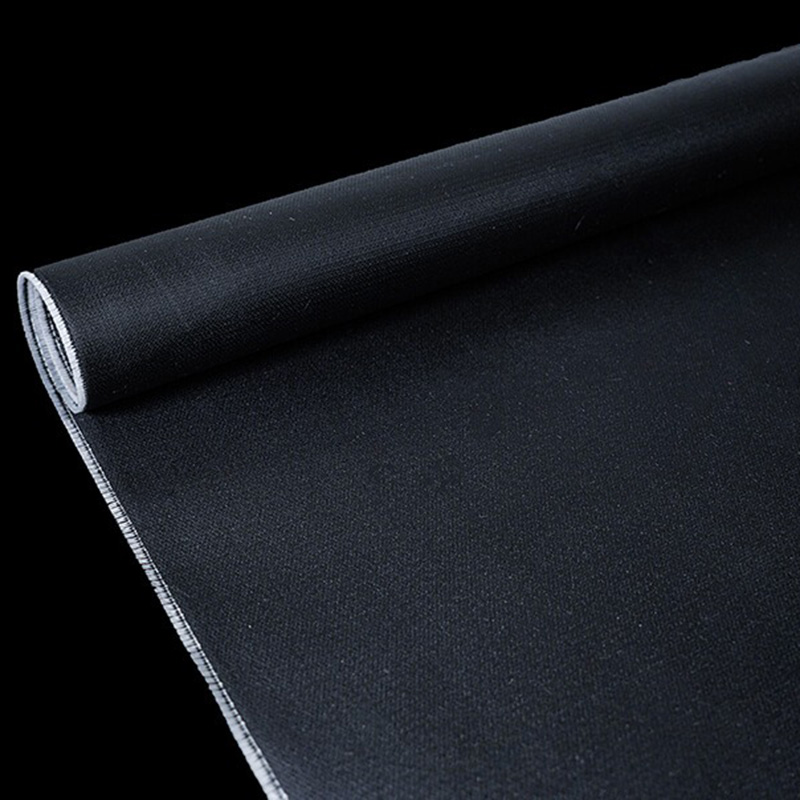
Not all thermal textiles perform equally across different industrial environments. You must match the specific fabric configuration directly to your exact workplace hazard. Selecting the wrong variant leads to premature failure and compromised safety.
A single-sided layer excels when you need outer environmental protection alongside inner surface conformability. It allows the raw glass side to rest directly against extremely hot equipment. We often utilize single-sided variants for custom pipe wrapping. They also work beautifully for specialized robotic equipment covers where flexibility matters most.
Conversely, double-sided variants protect against intense multi-directional hazards. You strictly require double-sided protection for reversible safety systems. A premium silicone coated fiberglass fabric ensures robust liquid and spark protection from both directions. This dual coating stops external chemicals from penetrating while preventing internal machinery fluids from leaking outward.
Textile weight directly determines mechanical lifespan, stiffness, and puncture resistance.
Light to Medium (15 oz - 17 oz): These lighter variants remain highly flexible. They conform effortlessly to complex mechanical geometries. You will find them ideal for standard removable insulation pads. They also serve perfectly as lightweight safety curtains in clean manufacturing zones.
Heavy Duty (32 oz and above): These dense textiles provide absolute maximum durability. Manufacturers engineer them specifically for extreme hazard zones. They easily survive heavy splatter welding protection environments. They handle industrial molten splash zones effectively. They form the rigid backbone of severe-duty expansion joints.
Best Practice: Always evaluate the bend radius of your equipment before selecting fabric weight. A 32 oz fabric offers superior protection but struggles to wrap tightly around small, one-inch diameter piping without severe buckling.
These advanced materials dominate specific heavy industry sectors due to their unique properties. We see them deployed daily in highly demanding operational scenarios. They protect expensive assets and ensure continuous facility uptime.
Heavy industry relies intensely on custom thermal covers for valves, flanges, and exhaust manifolds. Standard rigid metal cladding severely restricts frequent maintenance access. Therefore, this specialized high temp fabric stands as the default choice. It bends easily around incredibly complex metal geometries. Maintenance teams can rapidly remove and reinstall the jackets hundreds of times. The protective thermal barrier never degrades under this constant physical handling. It actively prevents moisture from reaching the pipe surface, thereby eliminating corrosion under insulation (CUI).
Hot work areas strictly require rigorous safety compliance. Facilities deploy these heavy fabrics to contain aggressive flying sparks. They actively prevent sudden combustible ignition in surrounding areas. The resilient silicone surface traps hot molten metal slag instantly. It cools the slag before it damages underlying sensitive equipment or harms nearby personnel. Unlike basic canvas, it never catches fire or smolders after capturing hot welding spatter.
Industrial exhaust ducts constantly shift and move. They handle massive volumes of high-temperature gas flow daily. You find these systems in HVAC networks, petrochemical refineries, and power generation plants. The flexible coated fabric absorbs severe mechanical vibration securely. It accommodates intense thermal expansion seamlessly. This critical flexibility prevents rigid ductwork from tearing itself apart under continuous operational stress. The chemical resistance of the coating also protects the joint from corrosive flue gases.
Procurement teams face significant hidden risks when sourcing specialized thermal materials. The global market contains many deceptive, substandard products. You must implement strict quality control checks before authorizing bulk purchases.
You must always physically test the silicone bond. Cheap silicon coated cloth suffers constantly from remarkably weak adhesion. The thin silicone layer peels or flakes off rapidly under simple mechanical flexing. This dangerous delamination destroys the protective liquid barrier instantly. To test this, vigorously rub the fabric against itself. High-quality coatings will never shed, crack, or separate from the base weave.
Poor manufacturing processes create microscopic pinholes across the textile surface. These invisible gaps totally compromise critical chemical and moisture barriers. We highly recommend inspecting the raw textile against a very strong backlight. This simple visual test easily detects dangerous inconsistent coating coverage or weak spots in the rubber application.
You must rigorously verify all supplier data. Always cross-reference their provided technical sheets against recognized global industry standards. Specifically look for ASTM D6413 certifications regarding vertical flame resistance. Check for distinct military specifications (mil-specs) if your specific aerospace or defense application requires them. Never accept verbal guarantees regarding temperature limits without documented laboratory proof.
Never commit blindly to massive high-volume fabrication orders. We strongly advise ordering several sample yards first. Perform intensive in-house seam testing immediately. Compare standard industrial sewing integrity against heavy mechanical fastening. Assess exactly how the material handles aggressive needle punctures during your actual daily fabrication process. High-quality variants heal slightly around needle holes, while poor-quality fabrics tear rapidly.
Common Mistake: Failing to match thread temperature limits to the fabric. Sewing a 1000°F rated silicone fabric using standard polyester thread guarantees catastrophic seam failure during the first heat cycle. Always mandate Kevlar or stainless steel thread for fabrication.
Selecting the precise thermal barrier requires intimately matching material characteristics to actual workplace hazards. It effectively bridges the critical gap between mandatory thermal necessity and harsh mechanical reality. You must always align fabric weight and specific coating sides precisely to the most severe environmental hazard present.
Take these concrete steps to ensure successful deployment:
Audit your facility's peak temperature spikes and chemical exposure zones carefully to establish a baseline.
Specify double-sided coatings for multi-directional hazards and heavy 32 oz weights for molten splash zones.
Consult directly with a certified materials engineer before finalizing procurement parameters.
Request comprehensive Technical Data Sheets (TDS) and mandate physical samples for aggressive prototype testing.
A: Yes, but it requires specialized high-temperature threads (like Kevlar, PTFE, or stainless steel wire) to ensure the seams match the fabric's heat resistance.
A: Silicone offers better flexibility and grip at a lower cost, ideal for insulation covers. PTFE offers superior chemical resistance and a lower coefficient of friction, but is stiffer and more expensive.
A: Yes, the closed-cell nature of the continuous silicone coating makes it highly resistant to water, oils, and industrial hydraulic fluids.
A: The silicone layer will begin to degrade, brittle, or ash, losing its waterproofing and mechanical flex. However, the underlying fiberglass will remain intact up to 1000°F (540°C) to provide emergency flame containment.


