

close
Choose Your Site
Global
Social Media
Views: 0 Author: Site Editor Publish Time: 2026-01-09 Origin: Site


In today’s industrial, automotive, and construction sectors, silicone coated fiberglass fabric has emerged as a critical material, valued for its exceptional fire resistance, high-temperature tolerance, and durability. Whether you’re working on an EV car fire blanket, industrial pipeline insulation, or a building’s fire curtain, selecting the right silicone coated fiberglass fabric directly impacts your project’s safety, performance, and long-term cost-effectiveness. However, with a wide range of products available—from different weights and coating types to varying performance ratings—navigating the options can be overwhelming. This guide will break down the key factors to consider, integrate essential insights into project-specific fiberglass fabric needs, and provide a practical framework to identify reliable silicone-coated material, ensuring you make an informed decision aligned with your project goals.
Before diving into product comparisons, it’s essential to understand the core attributes that define high-quality silicone coated fiberglass fabric. These characteristics determine how well the material will perform in your specific application, from withstanding extreme temperatures to resisting chemical corrosion. Below is a detailed breakdown of the critical factors, supported by data and industry standards to help you assess potential products.
The weight of silicone coated fiberglass fabric—typically measured in grams per square meter (g/m²) or ounces per square yard (oz/yd²)—directly correlates to its strength, insulation capability, and suitability for different tasks. Lighter fabrics offer flexibility for curved surfaces or lightweight applications, while heavier fabrics provide enhanced durability and heat resistance for high-stress environments.To simplify your selection, refer to the table below, which maps fabric weights to common project types and performance expectations:
| Fabric Weight (g/m²) | Equivalent (oz/yd²) | Key Strengths | Ideal Project Applications |
|---|---|---|---|
| 250–480 | 7.4–14.2 | Flexible, easy to cut/sew, cost-effective | EV car fire blankets, small-scale fire curtains, lightweight insulation for electronics |
| 510–860 | 15.1–25.4 | Balanced strength and flexibility, good thermal resistance | Industrial pipeline wrapping, medium-duty fire barriers, HVAC insulation |
| 1050–1550 | 31.0–45.8 | High tensile strength, extreme heat resistance | Heavy industrial equipment insulation (e.g., boilers, turbines), large-scale fire curtains, aerospace components |
For example, if your project involves manufacturing an EV car fire blanket (a common application for silicone coated fiberglass fabric), a 250–480 g/m² fabric would strike the right balance between flexibility (for easy storage in vehicles) and fire resistance. In contrast, a power plant’s pipeline insulation—exposed to constant high temperatures and mechanical stress—would require a heavier 1050+ g/m² fabric to ensure long-term durability.
Silicone coated fiberglass fabric is available in single-side and double-side coating options, each designed for specific use cases. The choice depends on whether your project requires one-sided protection (e.g., shielding a surface from heat) or full encapsulation (e.g., resisting moisture or chemicals from both sides).
| Coating Type | Structure | Advantages | Best For |
|---|---|---|---|
| Single-Side | Silicone coating on one surface; uncoated fiberglass on the other | Lower cost, lighter weight, better adhesion to certain substrates | Interior wall insulation, temporary fire barriers, applications where only one side needs protection |
| Double-Side | Silicone coating on both surfaces | Uniform protection, enhanced water/chemical resistance, longer lifespan | Outdoor pipeline insulation, EV car fire blankets, industrial expansion joints, marine applications |
For instance, a project-specific fiberglass fabric for outdoor pipeline wrapping would benefit from double-side coating to prevent rainwater and soil chemicals from penetrating the fiberglass base. In contrast, a temporary fire curtain for indoor construction could use single-side coating to reduce costs without compromising safety.
One of the most critical features of silicone coated fiberglass fabric is its ability to withstand high temperatures. Different products are rated for long-term and short-term heat exposure, and choosing a fabric that exceeds your project’s maximum temperature is non-negotiable for safety.Industry data shows typical temperature ranges for reliable silicone-coated material:
Long-term temperature resistance: 250°C–300°C (suitable for continuous use in boilers, HVAC systems)
Short-term temperature resistance: 550°C–1000°C (for emergency scenarios like fire suppression or short bursts of extreme heat)
To avoid material failure, always verify the manufacturer’s temperature ratings against your project’s needs. For example, a metal production facility’s heat shield—exposed to 800°C during casting—requires a fabric with a short-term rating of at least 800°C, such as 1550 g/m² double-side silicone coated fiberglass fabric.
Reliable silicone-coated material must meet global fire safety standards to guarantee it performs as advertised. Look for certifications that validate fire resistance, smoke density, and the absence of toxic fumes—critical for protecting people and equipment in case of a fire.Key certifications to check include:
GB8624-2006 (China): Classifies materials as A2 (non-combustible) or B1 (flame-retardant); required for building and industrial applications in China.
ISO 1182 (International): Tests non-combustibility of materials; widely recognized in automotive and aerospace sectors.
UL 94 (U.S.): Rates flame retardancy; UL 94 V-0 (self-extinguishing within 10 seconds) is ideal for electrical insulation projects.
Avoid products without clear certification—they may fail to block flames or release toxic smoke, putting your project at risk. For example, project-specific fiberglass fabric for a hospital’s fire curtain must hold GB8624-2006 A2 certification to ensure it doesn’t contribute to smoke inhalation during an emergency.
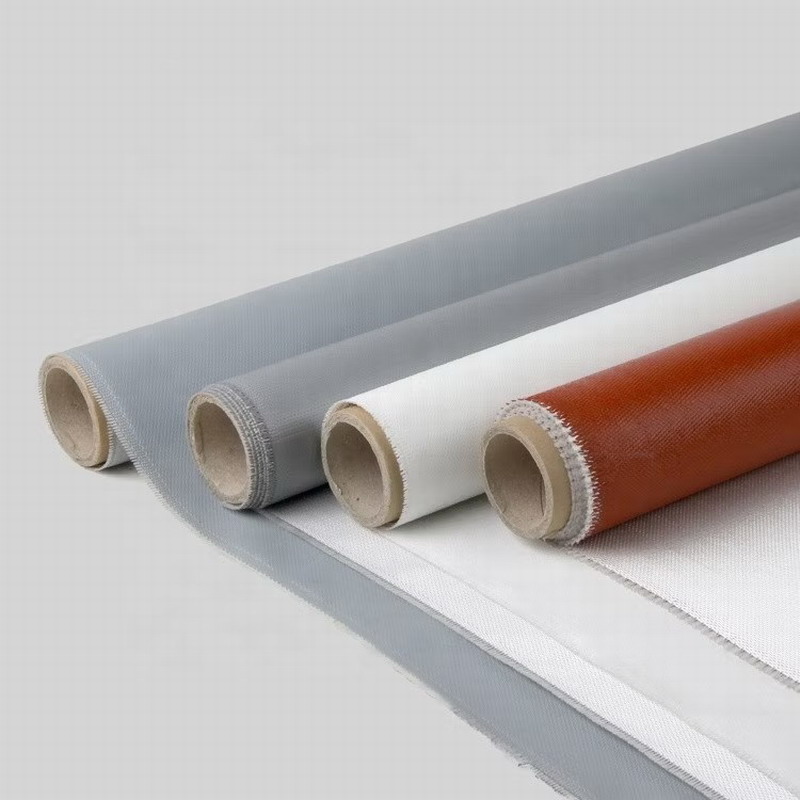
Now that you understand the key characteristics of silicone coated fiberglass fabric, follow this step-by-step fiberglass fabric selection guide to narrow down options and find the perfect match for your project. This framework prioritizes your unique needs, from budget to performance, and integrates best practices for identifying high-quality materials.
Start by answering the following questions to clarify what you need from your silicone coated fiberglass fabric:
What is the primary function? (e.g., fire protection, thermal insulation, chemical resistance)
What temperatures will the fabric face? (long-term and short-term exposure)
Will it be used indoors or outdoors? (outdoor use requires UV and water resistance)
What mechanical stresses will it endure? (e.g., friction, vibration, tearing)
Are there size or shape constraints? (e.g., narrow pipelines may need flexible fabric)
For example, if you’re designing a fire blanket for an EV (a project-specific fiberglass fabric need), your core requirements would include: fire resistance (GB8624-2006 A2), flexibility (for compact storage), and short-term temperature resistance of 550°C+. This immediately narrows your options to 250–480 g/m² double-side silicone coated fiberglass fabric.
Not all silicone coated fiberglass fabric manufacturers are equal—choosing a reputable supplier ensures you get reliable silicone-coated material. Look for the following indicators of quality:
Vertical integration: Manufacturers with in-house R&D and production have better control over material consistency.
Years of experience: Companies with 10+ years in the industry have refined their processes to avoid common defects.
Customization capabilities: Can they adjust weight, coating, or size to fit your project-specific fiberglass fabric needs?
Transparent testing data: Do they provide detailed technical sheets with temperature ratings, tensile strength, and certification results?
Avoid suppliers that offer vague product descriptions or refuse to share testing data—these are red flags for low-quality fabric.
Before placing a bulk order, request samples of 2–3 silicone coated fiberglass fabric options and test them against your requirements. Simple at-home or on-site tests can reveal critical flaws:
Coating uniformity: Inspect the sample for bubbles, gaps, or uneven thickness—these indicate poor manufacturing and reduce performance.
Adhesion test: Rub the coating with a dry cloth; if silicone peels off, the fabric will not last in high-stress applications.
Flexibility test: Bend the sample around a curved surface (e.g., a pipe); if it cracks or tears, it’s unsuitable for projects with complex shapes.
For industrial projects, consider third-party testing to verify claims. For example, a chemical plant’s corrosion-resistant barrier should undergo ISO 10289 testing to confirm it resists acids and oils.
While budget is important, choosing the cheapest silicone coated fiberglass fabric often leads to higher costs later (e.g., replacement, safety incidents). Instead, calculate the total value by considering:
Lifespan: A high-quality fabric (e.g., 1050 g/m² double-side) may cost 30% more upfront but last 5x longer than a low-quality alternative.
Maintenance needs: Does the fabric require regular cleaning or repairs? Reliable silicone-coated material is low-maintenance, reducing long-term labor costs.
Safety risks: A non-compliant fabric could lead to fines, equipment damage, or injuries—costs that far exceed the price of a quality product.
Use the table below to compare two common options for an industrial pipeline project:
| Product | Upfront Cost (per m²) | Expected Lifespan | Annual Maintenance Cost | Total 5-Year Cost (per m²) |
|---|---|---|---|---|
| Low-Quality 560 g/m² Single-Side | $15 | 1 year | $5 | $15 + (5×$5) = $40 |
| High-Quality 1050 g/m² Double-Side | $25 | 5 years | $1 | $25 + (5×$1) = $30 |
In this case, the high-quality silicone coated fiberglass fabric offers better value, even with a higher upfront cost.

To make a forward-thinking choice, it’s essential to align your silicone coated fiberglass fabric selection with the latest industry trends. These trends reflect evolving customer needs—from sustainability to smart technology—and influence the performance and availability of reliable silicone-coated material.
As global sustainability regulations tighten (e.g., EU’s REACH, China’s “Dual Carbon” goals), manufacturers are developing silicone coated fiberglass fabric with eco-friendly features:
Low-VOC coatings: Silicone formulations with reduced volatile organic compounds (VOCs) minimize air pollution during production and use.
Recyclable substrates: Innovations now include fiberglass bases that can be recycled at the end of their lifespan.
Energy-efficient production: Vertical-integration facilities use less energy to manufacture fabric, lowering the material’s carbon footprint.
For project-specific fiberglass fabric needs in green buildings or EV manufacturing, choosing eco-friendly options not only complies with regulations but also enhances your brand’s sustainability credentials.
With industries like aerospace and metal production pushing for higher operational temperatures, silicone coated fiberglass fabric is evolving to meet these demands. Recent innovations include:
Nanomodified silicone: Adding nanoparticles to the coating increases heat resistance by 20–30%, allowing fabrics to withstand 1000°C+ short-term exposure (used in rocket engine insulation).
Stainless steel fiber reinforcement: Integrating 316 stainless steel fibers into the fiberglass base boosts tensile strength and temperature tolerance for industrial furnaces.
If your project involves extreme heat (e.g., gas turbine insulation), look for these advanced materials to ensure long-term performance.
The rise of project-specific fiberglass fabric customization is a key trend, driven by the unique needs of industries like EVs and renewable energy. Manufacturers now offer:
Color-coded fabrics: Different colors for different temperature zones (e.g., red for 500°C+, blue for 300°C–500°C) to simplify on-site installation and maintenance.
Pre-cut shapes: Fabric cut to fit specific components (e.g., EV battery fire blankets, wind turbine blade insulation) reduces waste and labor time.
Hybrid coatings: Combining silicone with PU or PTFE for enhanced properties (e.g., silicone-PU coatings for oil-resistant pipeline wraps).
For example, a wind farm’s turbine blade project could use custom-cut silicone coated fiberglass fabric with a hybrid silicone-PTFE coating to resist both high winds and moisture.
Silicone coated fiberglass fabric stands out for its superior high-temperature resistance (250°C–1000°C) and fire safety, making it ideal for extreme-heat applications like fire blankets or industrial insulation. In contrast:
PU-coated fiberglass fabric offers better oil and chemical resistance but only withstands up to 150°C, suitable for food processing equipment.
PVC-coated fiberglass fabric is cheaper and water-resistant but degrades above 80°C, making it best for indoor signage or temporary covers.
Choose silicone coated fiberglass fabric if your project requires heat or fire protection; opt for other coatings for low-temperature, chemical-specific needs.
Reliable silicone-coated material meets three criteria:
Certifications: It holds global fire/safety certifications (e.g., GB8624-2006 A2, UL 94 V-0).
Consistent quality: Samples show uniform coating, strong adhesion, and no defects (e.g., bubbles, tears).
Transparent data: The manufacturer provides detailed technical sheets with temperature ratings, tensile strength, and lifespan estimates.
Avoid products without these attributes—they are likely to fail in critical scenarios.
Yes—most reputable manufacturers offer project-specific fiberglass fabric customization, including:
Adjusting weight (250 g/m² to 1550 g/m²) and coating type (single-side/double-side).
Cutting to specific sizes or shapes (e.g., pre-cut EV fire blankets).
Adding features like color-coding or hybrid coatings (silicone-PTFE) for niche needs.
Share your project’s requirements with the manufacturer to get a tailored solution.
Lifespan depends on weight, coating type, and usage conditions:
Lightweight fabrics (250–480 g/m²): 1–3 years (e.g., temporary fire curtains).
Medium-weight fabrics (510–860 g/m²): 3–5 years (e.g., indoor pipeline insulation).
Heavyweight fabrics (1050–1550 g/m²): 5–10 years (e.g., industrial equipment insulation).
Reliable silicone-coated material with double-side coating and high-quality fiberglass will last longer, especially if maintained properly (e.g., regular cleaning, avoiding sharp impacts).
Weight directly impacts strength, flexibility, and insulation:
Lightweight (250–480 g/m²): Flexible and easy to handle, suitable for curved surfaces or lightweight applications (e.g., EV fire blankets) but less durable for high-stress use.
Medium-weight (510–860 g/m²): Balanced strength and flexibility, ideal for general industrial insulation (e.g., HVAC systems) or medium-duty fire barriers.
Heavyweight (1050–1550 g/m²): High tensile strength and extreme heat resistance, best for heavy industrial use (e.g., boiler insulation) but less flexible.
Use the weight guide in Section 2 to match the fabric to your project’s demands.
Double-side silicone coated fiberglass fabric offers excellent resistance to most chemicals (e.g., acids, alkalis, oils) and moisture, making it suitable for outdoor or harsh environments. Single-side coated fabric has limited resistance on the uncoated side, so it’s better for dry, indoor applications. For projects exposed to aggressive chemicals (e.g., chemical plant pipelines), look for fabrics with specialized silicone formulations or hybrid coatings to ensure maximum protection.
Proper installation ensures optimal performance of silicone coated fiberglass fabric:
Clean the surface: Remove dust, grease, or debris to ensure the fabric adheres properly (if using adhesive).
Avoid sharp edges: Use grommets or edging tape to protect the fabric from tearing on sharp surfaces.
Allow for expansion: Leave small gaps (1–2% of the fabric length) to accommodate thermal expansion in high-temperature applications.
Secure firmly: Use heat-resistant fasteners (e.g., stainless steel clips) for outdoor or high-wind projects to prevent movement.
For complex installations (e.g., large fire curtains), consult the manufacturer’s installation


