

close
Choose Your Site
Global
Social Media
Views: 0 Author: Site Editor Publish Time: 2026-01-17 Origin: Site


In today’s competitive industrial landscape, materials that combine outstanding durability, heat resistance, and versatility are essential. Among these, fiberglass fabric silicone coating has emerged as a highly favored solution. Its unique combination of properties makes it indispensable across a broad spectrum of industrial sectors.
This article dives deep into the reasons why fiberglass fabric silicone coating is widely used in industry. We will analyze its technical advantages, compare it with other materials, explore key applications, and outline future trends. We will also incorporate essential terms such as industrial fiberglass fabric, wear-resistant composite material, and silicone fiberglass sheet to ensure comprehensive coverage and relevance.
At its core, fiberglass fabric silicone coating involves impregnating or coating woven fiberglass fabric with a silicone polymer. The base fabric, made from extremely fine glass fibers, already offers excellent mechanical strength and natural heat resistance. The silicone coating acts as a protective layer that enhances the fabric’s resistance to abrasion, chemicals, moisture, and ultraviolet (UV) light.
This treatment transforms the raw fabric into a wear-resistant composite material that remains flexible while significantly improving performance in harsh industrial environments. The silicone also adds waterproofing and electrical insulation properties, broadening the fabric’s usability.
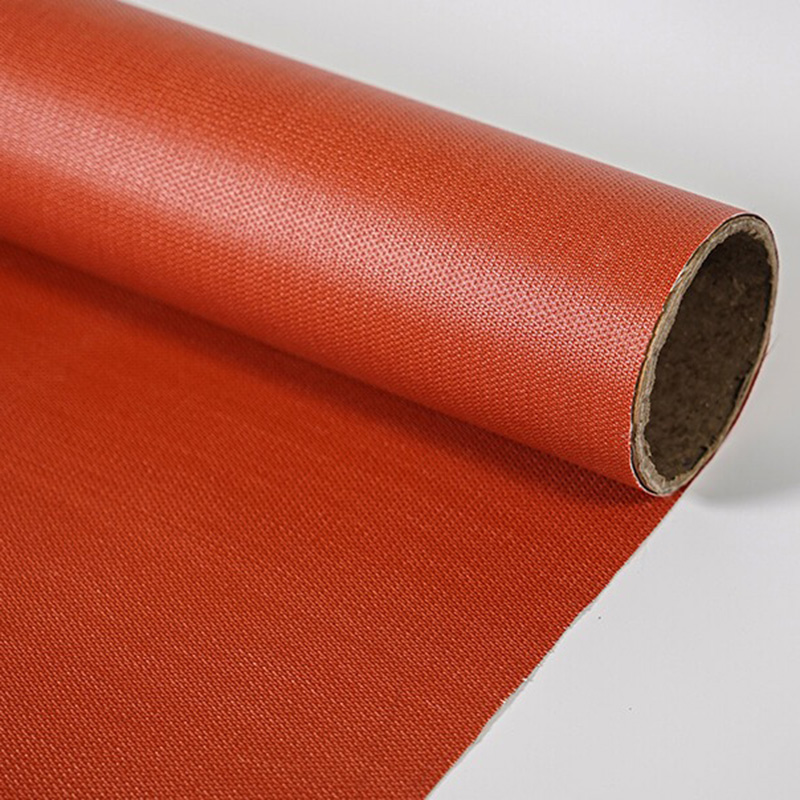
| Characteristic | Description |
|---|---|
| Temperature Resistance | Can endure continuous exposure up to 550°C (1022°F). |
| Abrasion & Wear Resistance | Silicone coating greatly improves lifespan under friction and mechanical stress. |
| Chemical Resistance | Resistant to oils, acids, solvents, and moisture ingress. |
| Flexibility | Maintains pliability for ease of fabrication and installation. |
| Electrical Insulation | Non-conductive and ideal for electrical insulation applications. |
| UV & Weather Resistance | Suitable for prolonged outdoor exposure without degradation. |
Industries dealing with high temperatures and abrasive conditions demand materials that don’t compromise on performance. Industrial fiberglass fabric coated with silicone offers this robustness. Its capability to withstand continuous heat and resist wear under mechanical stress reduces downtime and replacement frequency, driving cost savings.
From aerospace and automotive to electrical engineering and metal fabrication, fiberglass fabric silicone coating is used in many sectors. The coated fabric’s ability to be processed into various forms, including silicone fiberglass sheets, allows it to serve diverse roles like thermal insulation, fire barriers, and protective clothing.
With increasing regulatory standards on workplace safety and environmental protection, materials that are fire-retardant and chemically stable are in high demand. The flame-resistant nature of fiberglass fabric silicone coating helps industries meet these standards effectively.
The silicone layer creates a shield against friction and tearing, significantly extending the service life of products. This makes the coated fabric an ideal wear-resistant composite material for applications exposed to continuous mechanical action.
The coating process can be adjusted in thickness and texture, allowing manufacturers to tailor products for specific needs. The fabric remains easy to cut, sew, or mold, facilitating custom industrial solutions.
| Sector | Typical Applications | Benefits |
|---|---|---|
| Metalworking | Welding blankets, curtains, splash guards | High heat tolerance, abrasion resistance |
| Electrical | Insulation wraps, transformer covers | Electrical isolation, fire safety |
| Automotive | Heat shields, exhaust system wraps | Lightweight, thermal protection |
| Aerospace | Fire-resistant panels, thermal insulation | High safety compliance, heat resistance |
| Construction | Fireproof curtains, expansion joint covers | Fire retardancy, weather resistance |
| Chemical Industry | Protective barriers, insulation | Chemical resistance, durability |
The silicone fiberglass sheet represents a convenient and versatile form factor of coated fabric, often used for gaskets, seals, and insulation pads. Its benefits include:
Uniform silicone coating ensuring consistent performance.
Resistance to deformation under pressure.
Easy cutting and shaping to fit unique industrial components.
Usability across a broad temperature spectrum and chemical exposures.
This product form highlights the adaptability of fiberglass fabric silicone coating for specialized industrial needs.

| Material | Max Temp (°C) | Abrasion Resistance | Chemical Resistance | Flexibility | Cost |
|---|---|---|---|---|---|
| Fiberglass Fabric Silicone Coating | 550 | High | High | High | Moderate |
| PTFE Coated Fiberglass | 260 | Very High | Very High | High | High |
| Untreated Fiberglass Fabric | 450 | Moderate | Moderate | Moderate | Low |
| Aramid Fiber Fabric (Nomex) | 220 | Moderate | Moderate | High | High |
From this data, it is clear that fiberglass fabric silicone coating offers an optimal balance between heat tolerance, wear resistance, and cost-efficiency, outperforming many alternatives in industrial contexts.
Application of nanomaterials boosts heat insulation and mechanical strength without compromising flexibility or adding weight.
Development of low-VOC and recyclable silicone coatings reduces environmental impact, aligning with stricter ecological regulations.
Embedding sensors and conductive fibers for real-time condition monitoring is a growing trend, enhancing safety and predictive maintenance.
Coating textures are increasingly customized to improve grip, reduce friction, or increase chemical resistance for specialized applications.
It offers superior thermal resistance, abrasion protection, chemical stability, and flexibility—properties crucial for demanding industrial settings.
Yes, the silicone coating provides excellent UV and weather resistance suitable for prolonged outdoor exposure.
Metalworking, aerospace, automotive, electrical, construction, and chemical industries are primary users.
Yes, many are designed to be non-toxic, low in VOCs, and environmentally responsible.
Gentle washing with mild detergents and water is sufficient; the fabric’s chemical resistance ensures durability.
Absolutely. Thickness, coating weight, color, and dimensions can all be tailored to specific industrial requirements.
The extensive use of fiberglass fabric silicone coating across industries is no accident. It is a material that perfectly balances heat resistance, wear durability, chemical stability, and cost, making it an essential asset in industrial applications. Its evolution into forms like the silicone fiberglass sheet adds to its versatility, allowing industries to customize solutions that fit exacting demands.
As innovation pushes forward—integrating nanotechnology, smart sensors, and sustainable coatings—the role of fiberglass fabric silicone coating will only become more critical. Whether for thermal protection, fire safety, or mechanical durability, this wear-resistant composite material continues to set the benchmark for industrial fabrics.
For companies seeking reliable, high-performance materials, fiberglass fabric silicone coating is undoubtedly a top choice.


