

close
Choose Your Site
Global
Social Media
Views: 0 Author: Site Editor Publish Time: 2026-03-17 Origin: Site


Fiberglass swelling tape is a small material choice that can decide whether a joint stays dry for years—or becomes a recurring leak point that forces rework and warranty claims. In water-control applications, sealing performance is not only about “does it swell.” It’s about how fast it swells, how much it swells, how stable it remains after cycles of wet and dry, and whether it maintains sealing pressure under real installation constraints. Many buyers learn this the hard way: two products may look similar on a datasheet, yet behave very differently once embedded in concrete joints, pipe penetrations, prefabricated segments, or underground structures.
From our perspective at Jiangxi Mingchen New Materials Co., Ltd., the best procurement decisions happen when buyers check the right specifications early, then match them to job-site conditions. Fiberglass swelling tape is used in environments where replacement is difficult—tunnels, basements, retaining walls, culverts, manholes, and precast joints. That means selection should be conservative and engineering-focused. In this guide, we explain five key specifications that determine real performance, plus practical tips for comparing suppliers and avoiding common selection mistakes.
Fiberglass swelling tape is a sealing material designed for joints and penetrations where water ingress is a long-term risk. In most products, a fiberglass reinforcement tape is combined with a water-reactive swelling compound. When the tape contacts water, the swelling compound absorbs moisture and expands, filling micro-gaps and applying outward sealing pressure. This expansion helps block water paths through construction joints, precast segment interfaces, pipe penetrations, and other interfaces where perfect “hard sealing” is difficult to guarantee.
The fiberglass reinforcement is not just a carrier—it adds real functional value. It improves dimensional stability during handling and installation, helps the tape maintain its form under confinement, and reduces the risk of tearing or distortion when workers press it into position. In many jobs, fiberglass swelling tape is chosen because it offers a practical balance: it is easier to install than complex mechanical seals, but more reliable than simple putty-style fillers in wet and underground environments.
Because most sealing failures are expensive to repair once concrete is poured or structures are buried, the buyer’s focus should not only be “does it swell,” but “does it swell in the right way, in the right time window, and under real pressure conditions.”
The first and most obvious specification is swelling ratio—but this is also one of the most commonly misunderstood. Many product sheets advertise a high expansion percentage, yet in real structures the tape swells while confined inside a joint, not freely in water. That difference is critical.
1 Volumetric swelling ratio
This indicates how much the material expands under test conditions. However, ask how the swelling ratio is measured. Swelling values can vary depending on sample size, immersion time, water type, and whether the tape is allowed to expand freely.
2 Swelling capacity under confinement
This is the more “real-world” indicator. When the tape is installed inside a joint with limited space, it must still expand enough to fill voids and create sealing pressure. Some formulations swell impressively in free water but provide weaker sealing pressure when constrained.
3 Swelling behavior in different water types
Freshwater, groundwater, and saline water can affect swelling behavior differently. Certain minerals or salinity levels may slow down swelling or reduce expansion. If your project involves coastal areas, marine tunnels, or saline groundwater, this check becomes especially important.
A product may show high swelling in a lab cup test, but inside a concrete joint the material experiences:
limited swelling space
compressive resistance from concrete
potential joint movement and micro-cracking
uneven water exposure patterns
This is why swelling ratio must be interpreted as part of a system, not a single number.
Larger gap tolerance needs stronger swelling capacity
If joint gaps are larger or variable (common in precast segment assembly), you need a tape with sufficient swelling capacity under confinement. Otherwise, the tape may swell but still fail to fully seal the void.
Tight joints need controlled swelling
When joints are very tight, excessive swelling can create overpressure, displacement, or “crowding” that reduces stability. Controlled expansion can be safer and more predictable in tight tolerances.
Groundwater chemistry affects swelling behavior
If you expect aggressive groundwater conditions, specify test data in the closest water chemistry you can anticipate. Even if the tape swells well in freshwater, performance can differ in mineral-rich or saline environments.
Practical buyer tip
When requesting samples, ask for two test data sets: free swelling and confined swelling. This provides a much clearer performance picture than swelling ratio alone.
Swelling speed matters because job-site conditions are not always ideal. Some applications require fast response (early water exposure risk), while others need controlled swelling (to avoid premature expansion before concrete curing or before joint closure).
time to initial swelling
time to reach functional sealing expansion
whether swelling is gradual or rapid
behavior during repeated wet-dry cycles
Fast swelling is not always better. If the tape swells too early during installation, it may lose bonding or shift position.
Fiberglass swelling tape must stay exactly where it is installed. Movement during pouring, vibration, or joint closing can destroy sealing reliability.
adhesive backing performance (if applicable)
bonding strength to concrete, steel, PVC, or other substrates
fixation method requirements (nails, mesh, adhesive, clamping)
performance on damp surfaces
If the tape cannot stay fixed, swelling performance becomes meaningless.
Sealing in a real structure means resisting hydrostatic pressure. A tape that swells but cannot hold sealing pressure under water head will fail.
maximum water pressure resistance rating
leakage test standards and test conditions
sealing performance over time under continuous water pressure
performance under joint movement or settlement
If your project is underground, water pressure rating is one of the most important procurement filters.
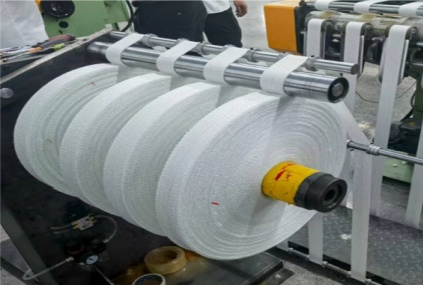
Swelling tape performance is highly sensitive to sizing. Many failures happen because the tape is the wrong thickness, the wrong width, or installed with insufficient cover.
tape width and thickness tolerance
recommended joint gap range
required concrete cover thickness
compression ratio after installation
corner and overlap recommendations
The best swelling tape will still fail if installed in a joint that exceeds its designed gap range.
Key specification | What it tells you | What to request from suppliers |
Swelling ratio | expansion capability | test data in confined and free swelling |
Swelling time | response speed | swelling curve over time |
Bonding strength | installation reliability | substrate bonding test + recommended fixation |
Water pressure resistance | sealing under load | pressure test report and conditions |
Dimensions & fit | joint compatibility | tolerance, cover requirements, gap range |
Selecting based only on swelling ratio without pressure testing
Ignoring groundwater chemistry and wet-dry cycles
Underestimating the importance of fixation and bonding
Choosing tape size without checking joint gap and cover thickness
Assuming all swelling tapes behave the same across suppliers
When requesting quotations, we recommend including:
project type (basement, tunnel, precast joint, pipe penetration, etc.)
joint gap range and required cover depth
water exposure type (groundwater, seawater, intermittent)
pressure requirement or depth
installation method and substrate type
This helps suppliers recommend a product that fits the application rather than forcing a generic solution.
Buying fiberglass swelling tape should be treated like an engineering decision, not a commodity purchase. The five key specifications that define real performance are swelling ratio, swelling time, bonding strength, water pressure resistance, and joint compatibility. When these specs match the job-site reality, swelling tape can provide long-term sealing with minimal maintenance and strong reliability. When they are mismatched, problems often appear later—when repair is most expensive. The best approach is to request test data, understand installation conditions, and choose a tape that performs under confinement and pressure, not only in lab free-swelling tests.
At Jiangxi Mingchen New Materials Co., Ltd., we support customers with fiberglass swelling tape solutions designed for stable sealing performance in demanding construction environments. If you want help matching tape specifications to your joint design and water exposure conditions, you are welcome to contact us to learn more about suitable options and technical guidance.
Swelling ratio matters, but water pressure resistance and bonding stability are often just as critical because sealing must hold under real load and installation conditions.
Choose faster swelling when early water exposure risk is high, and controlled swelling when installation time, vibration, or curing conditions require the tape to remain stable before activation.
Performance can vary by formulation. Buyers should request test data for the specific water type expected in the project, especially for saline or chemically active groundwater.
Common reasons include poor fixation, incorrect tape size for the joint gap, insufficient concrete cover, or sealing performance that cannot resist real water pressure.


