

close
Choose Your Site
Global
Social Media
Views: 0 Author: Site Editor Publish Time: 2026-03-15 Origin: Site


Industrial cable systems don’t fail in ideal conditions. They fail where heat, vibration, dust, moisture, and long operating cycles combine to stress every layer of the cable structure. In factories, power plants, rail systems, wind installations, oil and gas sites, and heavy equipment environments, cables are asked to carry load, resist abrasion, and maintain insulation integrity—often in confined spaces where temperatures rise and maintenance windows are short. That is why cable manufacturers and system integrators pay close attention to materials that protect cable performance under thermal stress. One of the most practical and widely applied solutions is Fiberglass Swelling Tape—a reinforcement and sealing material designed to help cables stay stable when conditions become harsh.
From our perspective at Jiangxi Mingchen New Materials Co., Ltd., fiberglass swelling tape is not “just tape.” It is a functional layer that supports cable reliability by combining high-temperature resistance with controlled swelling behavior. When selected and applied correctly, it helps fill gaps, stabilize cable structures, and contribute to sealing performance where heat and environmental factors would otherwise degrade standard materials. In this article, we’ll explain what fiberglass swelling tape is, why it matters for industrial cables, how high-temperature conditions affect cable systems, and what performance factors buyers should focus on when selecting the right tape for their production and application needs.
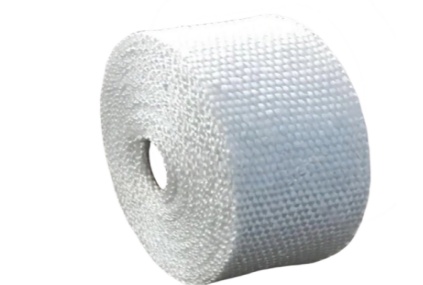
Fiberglass swelling tape is typically a tape structure built on fiberglass (glass fiber) reinforcement, combined with a swelling functional component. The fiberglass provides mechanical stability and heat tolerance, while the swelling function supports gap-filling and sealing behavior when exposed to specific conditions (often related to moisture or thermal/environmental triggers depending on design).
In cable structures, tapes are commonly used to:
bind layers together
provide reinforcement
add thermal and mechanical stability
support sealing performance
protect against deformation during installation and operation
Fiberglass swelling tape is used when the environment demands more than basic binding—especially when temperature exposure is higher and material stability is critical.
Heat affects cables in ways that are not always visible at first. Even when a cable continues to operate electrically, thermal stress can slowly reduce mechanical integrity, accelerate aging of polymer layers, and weaken interfaces between layers.
Softening or deformation of polymer layers under sustained temperature exposure
Shrinkage or dimensional change that creates internal gaps
Loss of compression around interfaces, reducing sealing performance
Increased brittleness over time for some materials after thermal cycling
Higher risk of micro-movement under vibration when structural stability is reduced
In industrial settings, the result is often not one sudden break. It is gradual degradation that increases failure risk—especially in systems where cables run continuously and are difficult to access.
This is why high-temperature resistant materials are valued. They help cable structures maintain shape, pressure, and stability when conditions push beyond normal operating comfort.
Fiberglass reinforcement has a key advantage: it maintains mechanical integrity under higher temperatures compared with many polymer-only tape structures. In practical terms, fiberglass helps the tape:
stay dimensionally stable
resist softening
maintain tensile strength under heat
keep wrapping and binding performance consistent
For industrial cable manufacturers, this stability matters during:
extrusion and sheath processes
curing steps
high-temperature operating environments
thermal cycling in the field
When the base reinforcement is stable, the cable structure is less likely to shift or loosen as temperatures change.
The “swelling” function in fiberglass swelling tape is often used for gap management and sealing support. In real cable structures, small gaps can appear due to:
dimensional tolerance variation
layer movement during installation
thermal expansion and contraction cycles
mechanical vibration over long periods
When gaps exist, they can create pathways for:
moisture movement
contaminant ingress
localized stress points
reduced stability in cable layer interfaces
Swelling behavior helps compensate for these gaps by expanding to maintain contact pressure and reduce the likelihood of open pathways. This is especially valuable in industrial environments where cables may be exposed to moisture, condensation, washdown zones, or variable outdoor conditions.
In industrial use, fiberglass swelling tape is chosen because it provides a combined performance package that matches harsh conditions.
When a cable runs near heat sources or carries high load, internal temperature can rise. Fiberglass reinforcement helps maintain structural stability so the wrap stays tight and functional.
In multi-layer cable designs, tapes help keep layers aligned. When layers shift, performance can degrade. A stable tape helps reduce this movement.
Swelling behavior helps maintain contact at interfaces and reduce gap formation, improving protection in environments where ingress risk exists.
Industrial cables often experience:
daily thermal cycles
start-stop heating patterns
vibration from equipment
intermittent moisture exposure
Materials that maintain stability under cycles typically support more predictable cable performance.
Fiberglass swelling tape is often considered in cable designs used in:
heavy industrial plants
power generation facilities
rail and transit systems
mining operations
wind and solar infrastructure
marine-adjacent installations
oil, chemical, and processing sites
automation lines with heat and vibration
In these environments, the cable is not only exposed to heat—it is exposed to heat plus movement, contamination, and long service intervals. That combination is what makes durable tape layers important.
The exact placement depends on cable design, but commonly it is used where it can:
bind and stabilize layers
add a protective barrier function
support sealing behavior around critical interfaces
Common functional roles include:
binder tape layer to secure bundles or fillers
interlayer tape to stabilize between insulation and sheath systems
protective wrap where mechanical stability and thermal tolerance are needed
Because cable structures vary widely, selection should always match the intended cable architecture and the operating conditions.
When selecting fiberglass swelling tape, industrial buyers usually focus on practical performance parameters rather than just material names.
Performance Factor | What It Means in Practice | Why It Matters for Industrial Cables |
Temperature resistance | maintains strength and shape under heat | reduces loosening and deformation |
Tensile strength | resists tearing during wrapping and use | supports consistent processing and stability |
Controlled swelling behavior | expands predictably under trigger conditions | improves gap filling and sealing support |
Thickness and density consistency | uniform tape behavior across rolls | supports repeatable cable quality |
Compatibility with cable materials | works well with sheath/insulation systems | reduces interface issues during production |
Processing behavior | easy wrapping, stable unwind | improves manufacturing efficiency |
A high-quality tape should perform consistently not only in one test, but across production runs and field conditions.
Beyond field performance, fiberglass swelling tape can support cable manufacturing in practical ways:
A tape that holds its structure under heat helps cable layers stay consistent during thermal steps and extrusion operations.
When tape thickness and strength are consistent, it reduces unexpected issues such as tearing, uneven wrapping, or layer shifting.
Stable tape performance supports more predictable finished cable properties, which is especially important for industrial contracts that require consistent output.
Industrial cable reliability depends on how well a cable handles heat, cycles, and environmental stress over long service life. Fiberglass swelling tape is vital in many designs because it combines high-temperature stability with controlled swelling behavior that supports gap management and sealing performance. In practical terms, it helps cable layers remain stable under thermal stress, improves interface integrity, and reduces the risk of small pathways that can allow moisture or contaminants to move into the structure. When selected correctly, it supports both manufacturing consistency and long-term performance in harsh industrial conditions.
At Jiangxi Mingchen New Materials Co., Ltd., we focus on fiberglass swelling tape solutions designed for industrial cable demands—stable reinforcement, reliable processing behavior, and performance-focused material control. If you are developing or sourcing fiberglass swelling tape for industrial cable applications and want support on specification selection, performance matching, or supply planning, you are welcome to contact Jiangxi Mingchen New Materials Co., Ltd. to learn more.
Fiberglass swelling tape is commonly used to stabilize cable layers and support sealing through controlled expansion, especially in environments with heat and potential ingress risk.
Fiberglass reinforcement helps maintain mechanical strength and dimensional stability under higher temperatures compared with many polymer-only tape structures.
In many designs, controlled swelling behavior helps fill gaps and maintain contact pressure, which can reduce pathways where moisture might migrate.
Focus on temperature resistance, tensile strength, controlled swelling behavior, thickness consistency, and compatibility with your cable structure and process conditions.


