

close
Choose Your Site
Global
Social Media
Views: 0 Author: Site Editor Publish Time: 2026-03-13 Origin: Site


Water is one of the most common “silent failures” in cable systems. It may enter through a damaged outer sheath, a poorly sealed termination, a connector interface, or micro-gaps created during installation. Once moisture gets inside, it can travel surprisingly far—especially along longitudinal pathways between layers, fillers, and voids. That movement doesn’t always create immediate, visible damage, but it can raise risk over time: insulation performance may degrade, metallic elements may corrode, attenuation may increase in communication cables, and maintenance costs rise because the fault becomes harder to locate. This is why water blocking is not a luxury feature in many cable designs—it is an engineering decision that improves reliability across real-world conditions. Among several water-blocking options, Fiberglass Swelling Tape has become a practical, widely adopted solution because it combines mechanical reinforcement with rapid water-activated sealing.
From our perspective at Jiangxi Mingchen New Materials Co., Ltd., the best water-blocking materials are the ones that work under the pressures of cable manufacturing and the realities of field installation. Fiberglass swelling tape is designed to sit inside the cable structure and respond quickly when water enters—swelling to fill free space, creating a gel-like barrier that slows or stops water migration.
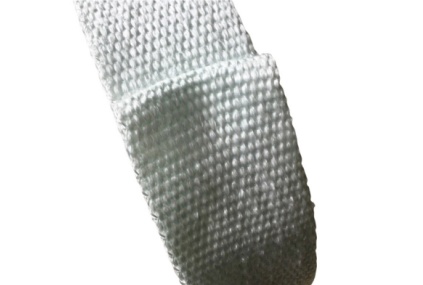
Fiberglass swelling tape is a water-blocking tape used in cable construction. It typically consists of:
a fiberglass substrate (the carrier) that provides structure, strength, and dimensional stability
a water-swellable component, often based on superabsorbent polymer (SAP), coated or integrated into the tape
optional binders or processing treatments that control powder shedding, adhesion, and swelling behavior
The fiberglass base gives the tape strength and thermal stability, while the water-swellable system provides the core water-blocking function.
Even well-designed outer jackets are not perfect forever. Water ingress can happen because of:
sheath damage during pulling, bending, or abrasion
rodent bites or accidental cuts
poor sealing at joints and terminations
installation in wet ducts, flooded trenches, or high humidity zones
condensation cycles in temperature-changing environments
Once water is inside the cable, it can move through:
longitudinal gaps between layers
interstices around conductors and fillers
spaces around armor wires or strength members
voids created by manufacturing tolerances
Water-blocking elements (like swelling tapes, yarns, powders, gels) are used to interrupt these pathways.
The key “active ingredient” in swelling tapes is often SAP (superabsorbent polymer). SAP materials can absorb water many times their own weight, turning absorbed moisture into a gel-like mass.
Water enters the cable through an opening or damaged area.
Water reaches the swelling tape located under the sheath or within the cable core.
SAP particles absorb water, expanding rapidly.
The expanded gel fills voids and gaps, creating a physical barrier.
The barrier reduces longitudinal water flow, limiting how far water can travel inside the cable.
This is not just “absorption”—it’s space-filling. The swelling transforms open pathways into blocked pathways.
Many water-blocking tapes can use nonwoven or polymer carriers, but fiberglass brings specific advantages:
Dimensional stability: fiberglass does not stretch easily, helping keep tape position stable during cabling
Mechanical reinforcement: it can add strength to certain layers and help resist deformation
Thermal resistance: fiberglass performs well under heat exposure during processing (within system design limits)
Handling consistency: stable carrier properties can improve wrapping consistency and reduce variation in application
Fiberglass is especially valued where the tape must maintain its shape and placement under tension during high-speed production.
The tape can be used in different positions depending on cable type and water risk level:
Under the outer sheath to stop water that enters from outside
Around the cable core as a wrap layer to block longitudinal migration
Under armor layers in armored cables to prevent water movement along armor interfaces
Between layers where pathways tend to form (design-dependent)
In many designs, the tape acts like a “water gate”—it doesn’t need to be everywhere, it needs to be placed where water would travel.
Not all swelling tapes behave the same. The best performance depends on matching tape properties to cable structure and operating environment.
How quickly the tape swells after contacting water matters because early swelling prevents long-distance migration. Faster swelling generally offers quicker sealing.
Higher swelling capacity can fill larger voids, but it must be balanced to avoid excessive expansion that could stress internal layers in some designs.
In real conditions, water may be under pressure. The gel barrier must resist being pushed through pathways.
Loose SAP powder can contaminate equipment, reduce consistency, and create handling issues. Many designs favor controlled coating/binding to reduce dust.
The tape should fit your process temperature, wrapping method, and mechanical requirements without introducing production instability.
Specification | What It Controls | Why It Matters in Cables |
Tape thickness | Layer build + space filling | Affects fit within cable geometry |
Tape width | Wrap coverage | Determines overlap and sealing continuity |
SAP coating weight | Swelling strength | Affects blocking performance and speed |
Swelling time | Response speed | Limits early water migration distance |
Tensile strength | Handling + wrapping stability | Supports high-speed production consistency |
Elongation | Dimensional behavior under tension | Prevents distortion during cabling |
Dust/shedding level | Clean production | Reduces equipment contamination |
Temperature tolerance | Process stability | Helps maintain performance during manufacturing |
This table can also be used as an RFQ checklist so suppliers understand your performance priorities clearly.
Cable designs use multiple water-blocking approaches depending on cost, performance, and manufacturing style.
Tape: cleaner handling, less mess, simpler termination work
Gel: can offer strong blocking but may complicate processing and cleanup
Tape: broad-area coverage, effective barrier wrap
Yarn: flexible placement in interstices; often used with tapes for combined protection
Tape: controlled placement, better process cleanliness
Powder: can be effective but may create dust and uneven distribution without control measures
Many cable designs combine methods—for example, swelling yarn in the core plus swelling tape wrap under the sheath.
A key concept in cable water blocking is longitudinal water migration—water traveling along the cable length. Swelling tape helps stop this because it:
wraps around a circumference, forming a ring-like barrier
swells inward to close gaps
creates a discontinuity that water cannot pass easily
Think of it like placing a plug inside a pipe—once the plug forms, water cannot keep traveling along the length.
A common sourcing problem is that buyers specify only “water blocking tape” and get inconsistent results. A better approach is to specify based on the cable’s reality.
under sheath? around core? under armor? between layers?
along sheath interface? armor gaps? filler channels?
fast swelling for quick barrier
higher capacity for larger voids
balanced performance for long-term stability
wrapping speed
tension settings
overlap requirement
dust sensitivity of the line
storage and handling conditions
Fiberglass Swelling Tape works because it combines a stable fiberglass carrier with water-swellable materials that rapidly absorb moisture and expand into a gel-like barrier. That swelling action fills gaps inside the cable structure, blocking the pathways that water would otherwise use to travel along the cable length. The best results come when the tape is matched to the cable design (placement, geometry, pathways), specified with clear performance targets (swelling speed, coating weight, dust control), and applied consistently in production.
At Jiangxi Mingchen New Materials Co., Ltd., we support cable manufacturers and material buyers with water-blocking solutions designed for real manufacturing conditions and practical cable reliability. If you are evaluating fiberglass swelling tape for your next cable project—or want help specifying the right performance parameters—you are welcome to learn more through Jiangxi Mingchen New Materials Co., Ltd. and contact our team for product information and selection support.
Fiberglass swelling tape acts as a water-blocking barrier. When water enters the cable, the tape swells to fill gaps and helps stop longitudinal water migration.
The ideal swelling time depends on the application. Faster swelling is typically preferred in high water-ingress risk environments, while balanced swelling may suit general outdoor use.
It is commonly used under the outer sheath, around the cable core, under armor layers, or between layers where water pathways may form.
Include tape width, thickness, SAP coating weight, swelling speed, tensile strength, dust/shedding control expectations, and the intended placement in the cable structure.


