

close
Choose Your Site
Global
Social Media
Views: 0 Author: Site Editor Publish Time: 2026-03-20 Origin: Site


Water penetration is one of the most common causes of cable degradation in power transmission and communication networks. Once moisture enters the cable structure, it can migrate along internal pathways and gradually damage insulation layers, leading to reduced electrical performance and long-term reliability risks. For this reason, modern cable manufacturing relies heavily on water-blocking materials that prevent moisture from spreading inside the cable core. Among these solutions, Fiberglass Swelling Tape has become a widely used component because of its unique ability to combine mechanical reinforcement with water-blocking expansion.
From our experience working with cable material manufacturers and insulation system designers, one of the most frequent questions we encounter concerns the functional differences between semi-conductive and insulating fiberglass swelling tapes. Both types serve important roles in cable protection, yet they are designed for different electrical and structural purposes. Understanding when to use each type is essential for engineers, cable manufacturers, and procurement specialists who want to ensure optimal cable performance and durability. In this article, we share practical insights into the characteristics of each type and explain how selecting the correct fiberglass swelling tape can improve cable reliability in demanding environments.
Fiberglass swelling tape plays a crucial role in modern cable protection systems, especially in environments where moisture intrusion can threaten long-term cable reliability. In power transmission, telecommunications, and industrial infrastructure, water penetration is one of the most common causes of cable failure. Once moisture enters the cable structure, it can travel along the internal layers and gradually damage insulation materials. To prevent this, manufacturers use specialized water-blocking materials such as fiberglass swelling tape.
The tape is typically produced by combining a strong fiberglass reinforcement layer with highly absorbent swelling compounds. When the tape comes into contact with moisture, the water-absorbing particles react quickly and expand. This expansion creates a gel-like barrier that fills the internal spaces within the cable structure, effectively blocking further water migration. By stopping water from spreading along the cable length, the tape helps protect insulation layers and maintain stable electrical performance.
Beyond its water-blocking capability, the fiberglass reinforcement layer provides important structural support. It offers mechanical strength and dimensional stability, allowing the tape to withstand tension during cable manufacturing processes such as wrapping, extrusion, and armoring.
Another advantage of fiberglass swelling tape is its versatility. It can be applied in a wide range of cable designs, including power cables, communication cables, fiber optic cables, and specialized industrial cables. This compatibility makes it an essential material for improving cable durability and long-term performance in demanding environments.
Semi-conductive fiberglass swelling tape is designed for applications where electrical conductivity is required within the cable structure.
One of the primary functions of semi-conductive materials in cables is to control electric field distribution. Semi-conductive fiberglass swelling tape helps equalize electrical potential across the cable layers, preventing localized stress points.
In medium and high-voltage cables, semi-conductive layers are often used to maintain stable electrical characteristics. Incorporating semi-conductive swelling tape into the cable design supports consistent electrical performance.
This type of tape offers dual functionality. It not only prevents water penetration but also contributes to electrical shielding and field control within the cable structure.
Unlike the semi-conductive version, insulating fiberglass swelling tape focuses on electrical isolation rather than conductivity.
Insulating fiberglass swelling tape helps maintain separation between conductive components inside the cable. This reduces the risk of electrical interference or short circuits.
Many communication cables and low-voltage power cables require reliable insulation between internal components. Insulating swelling tapes provide an additional layer of protection while also offering water-blocking performance.
The fiberglass reinforcement layer adds structural strength, helping maintain the cable’s internal configuration even under mechanical stress during installation.
Although both products share the same swelling mechanism and fiberglass reinforcement, their electrical properties differ significantly.
Property | Semi-Conductive Fiberglass Swelling Tape | Insulating Fiberglass Swelling Tape |
Electrical Conductivity | Conductive or semi-conductive | Electrically insulating |
Typical Application | Medium and high-voltage cables | Communication and low-voltage cables |
Function | Field control and shielding | Electrical separation |
Water Blocking | Yes | Yes |
Structural Reinforcement | Yes | Yes |
This comparison illustrates why selecting the correct tape type is essential when designing cable systems.
Selecting the appropriate fiberglass swelling tape requires careful consideration of several factors.
Voltage rating is one of the most important parameters. Medium and high-voltage cables typically require semi-conductive layers to manage electric fields, making semi-conductive swelling tape a suitable choice.
Low-voltage and communication cables often prioritize insulation performance, which makes insulating fiberglass swelling tape more appropriate.
Different cable constructions require different materials. Engineers must consider the arrangement of conductors, insulation layers, and shielding components when determining the most suitable tape.
Cables installed in humid environments or underground installations face a higher risk of water penetration. High-quality swelling tape provides effective protection in these conditions.
The tape must also integrate smoothly into cable production processes. Proper tensile strength and flexibility ensure that the tape can be applied consistently during manufacturing.
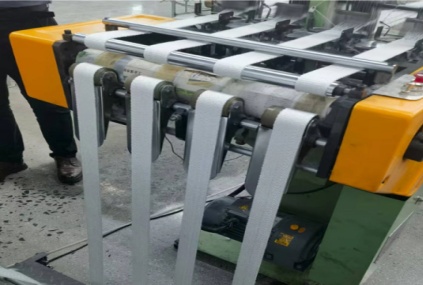
Semi-conductive fiberglass swelling tape is widely used in medium and high-voltage cable systems.
In power transmission cables, maintaining electrical field stability is critical. Semi-conductive layers ensure uniform electrical distribution across the cable structure.
Underground installations are especially vulnerable to moisture. The swelling properties of the tape help prevent water migration along the cable.
Industries such as energy and infrastructure require cables that perform reliably for many years. Semi-conductive swelling tape supports both electrical performance and water resistance.
Insulating fiberglass swelling tape is commonly used in communication and low-voltage cable designs.
Optical fiber cables often include insulating swelling tapes to protect sensitive fibers from moisture and mechanical stress.
Modern communication systems require stable signal transmission. Insulating tapes help maintain proper separation between cable components.
Certain industrial cable applications require strong water-blocking capability without introducing electrical conductivity. Insulating swelling tapes are well suited for these designs.
From a material supplier’s perspective, producing reliable fiberglass swelling tape involves careful control of several factors.
The fiberglass reinforcement layer must provide consistent mechanical strength. High-quality fibers improve the tape’s durability during cable production.
The swelling compound must respond quickly to water exposure while maintaining stability during long-term storage.
Uniform thickness and width ensure smooth integration into cable manufacturing lines.
The table below summarizes key decision factors when choosing between semi-conductive and insulating fiberglass swelling tapes.
Selection Factor | Semi-Conductive Tape | Insulating Tape | Recommended Use |
Voltage level | Medium to high voltage | Low voltage | Based on cable design |
Electrical function | Field control | Electrical isolation | Depends on system requirements |
Water blocking | Strong | Strong | Both effective |
Cable structure | Shielded cables | Communication cables | Determined by engineering design |
Choosing between semi-conductive and insulating Fiberglass Swelling Tape ultimately depends on the electrical requirements and structural design of the cable system. While both types provide effective water-blocking protection and mechanical reinforcement, their electrical functions differ significantly. Semi-conductive tapes help regulate electrical fields in medium and high-voltage cables, whereas insulating tapes provide reliable separation and protection for communication and low-voltage applications. By carefully evaluating cable voltage levels, structural design, and environmental conditions, manufacturers can select the most appropriate water-blocking fiberglass tape to ensure long-term reliability and performance.
For companies seeking dependable cable protection materials, we recommend exploring the advanced solutions provided by Jiangxi Mingchen New Materials Co., Ltd. With extensive experience in cable material technology and manufacturing, the company continues to supply high-quality swelling tapes designed to meet the evolving demands of modern cable systems. Their technical expertise and material innovation support cable manufacturers around the world in building safer and more reliable infrastructure.
Fiberglass swelling tape is used as a water-blocking material in cable structures. When exposed to moisture, the tape expands and prevents water from spreading along the cable.
Semi-conductive tape helps control electrical fields and improve shielding performance, while insulating tape provides electrical separation between cable components.
Yes. The combination of fiberglass reinforcement and water-blocking expansion helps protect cables from moisture damage and mechanical stress.
Communication cables, fiber optic cables, and low-voltage power cables commonly use insulating fiberglass swelling tape for moisture protection and electrical isolation.


