

close
Choose Your Site
Global
Social Media
Views: 0 Author: Site Editor Publish Time: 2026-05-14 Origin: Site


High-performance internal combustion engines push mechanical limits constantly during rigorous operation. They generate extreme radiant heat continuously during sustained, aggressive driving sessions. This intense, unrelenting thermal output severely stresses every nearby structural component in your vehicle's tight engine bay.
Uncontrolled radiant heat leads directly to degraded surrounding parts and dangerously elevated under-hood temperatures. It also significantly reduces exhaust gas velocity, which actively cripples your engine's overall thermodynamic efficiency. Mechanics frequently battle melting electrical wires, failing starters, and compromised alternators caused by this unchecked thermal radiation.
You need a premium thermal barrier derived from extruded volcanic rock to solve this complex engineering challenge permanently. We will systematically explore how basalt fiber tape drastically outperforms traditional E-glass materials without releasing irritating, hazardous airborne particulates. This comprehensive guide provides a rigorous, data-backed evaluation framework for automotive professionals deciding when and how to implement these advanced thermal wraps.
Thermal Limits: Safely sustains continuous exposure to 1,350°F–1,500°F (732°C–815°C) and handles short-term peaks up to 2,000°F (1,095°C).
Performance Engineering: Reduces under-hood temperatures by up to 50% while accelerating exhaust gas velocity (scavenging effect) for measurable horsepower gains.
Material Superiority: Offers 25% better insulation than standard fiberglass, higher tensile strength, and natural resistance to saltwater, acids, and alkalis.
Installation Integrity: Smooth surface reduces snagging in tight clearances, while precise 25–50% overlap rules prevent header-cracking "hot spots."
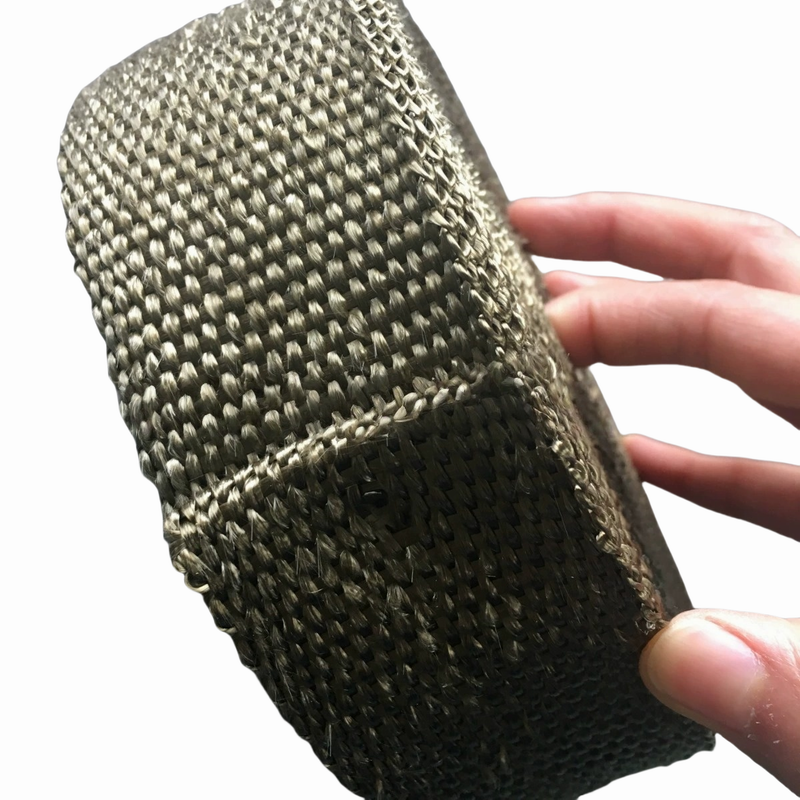
Radiant heat behaves like intense light inside your engine compartment. It travels outward from the exhaust manifold in straight lines. It strikes nearby surfaces and transfers immense thermal energy. Wires, plastic fluid reservoirs, and sensitive electronics absorb this energy daily. Over time, this constant thermal baking destroys them completely. Basalt fiber acts as a highly efficient containment shield. It actively blocks radiant energy from escaping the metal pipe. Documented laboratory tests reveal massive temperature drops upon application. Surface temperatures can fall rapidly from 230°C down to just 115°C. This 50% reduction effectively protects your delicate alternators, starters, and wiring harnesses. You save considerable money by avoiding premature component failure.
Next, we must consider the mechanical scavenging effect. Engine power gains depend heavily on maintaining high exhaust gas velocity. Internal combustion engines pump air in and out constantly. Fast-moving exhaust creates a low-pressure vacuum zone behind it. This vacuum actively pulls the next intake charge into the combustion chamber much faster. Engineers call this critical process scavenging. By trapping heat inside the manifold, exhaust gases remain extremely hot. Hot gases stay expanded and physically less dense. Less dense fluids flow significantly faster through restrictive piping systems. Wrapping your headers increases overall exhaust gas velocity by an estimated 7 to 10 percent. You improve the engine's volumetric efficiency and unlock measurable horsepower gains. A premium basalt fiber exhaust wrap makes this entire process possible.
Finally, uniform heat dissipation ensures long-term structural safety. Cheaper wraps often create dangerous localized thermal loading. They insulate unevenly across the curved pipe surface. Heat pools intensely in specific, uncovered areas. Mechanics call these dangerous areas hot spots. Hot spots severely weaken the metal structure underneath the wrap. They cause rapid metal fatigue or even catastrophic pipe cracking. Woven basalt avoids this thermal problem entirely. It distributes heat evenly across the entire wrapped surface area. You prevent dangerous over-insulation while simultaneously maintaining peak thermal efficiency.
Performance Metric Chart: Heat Reduction Before & After Wrapping | |||
Testing Parameter | Unwrapped Header | Basalt Wrapped Header | Net Improvement |
|---|---|---|---|
Surface Temperature | 230°C | 115°C | 50% Reduction |
Under-Hood Ambient Temp | 92°C | 58°C | 36% Reduction |
Exhaust Gas Velocity | Baseline Flow | Accelerated Flow | +7% to 10% Gains |
Engineers constantly evaluate high temperature basalt tape against traditional fiberglass and ceramic alternatives. Basalt consistently wins these comparisons on multiple critical fronts. We must first examine thermal tolerance and overall efficiency. Basalt fiber naturally resists extreme temperature spikes better than standard materials. It offers roughly 35% higher specific energy absorption than standard E-glass fiberglass. Furthermore, it provides 25% better continuous thermal insulation. You trap significantly more heat inside the pipe where it belongs.
Mechanical durability also separates basalt from older, inferior materials. Rough fiberglass tapes snag very easily during tight applications. They catch constantly on sharp engine brackets during routine installation. They fray, unravel, and fall apart quickly. Basalt features a distinctly shiny, exceptionally smooth surface finish. This polished surface inherently resists mechanical snagging and fraying. You can pull it safely through tight clearances in cramped engine bays. It survives the rigorous installation process completely intact.
Health and handling considerations represent another massive material upgrade. Professional installers genuinely dread handling traditional fiberglass wraps. E-glass continuously sheds abrasive, skin-irritating micro-fibers into the surrounding air. They embed painfully in your bare skin and lungs. You must wear heavy, uncomfortable PPE to handle them safely. Basalt differs completely from these older materials. It is a continuous filament volcanic rock product. It simply does not release these dangerous, airborne particulates. You experience much lower PPE requirements during the installation phase. You will not suffer from severe itching for days after wrapping a pipe.
Finally, we look closely at environmental and chemical resistance. Your engine bay constantly exposes materials to harsh, destructive elements. Basalt stands up bravely to heavy radiation exposure. It ignores corrosive saltwater exposure completely. This specific trait proves critical for marine exhaust systems. It also firmly resists common automotive solvents, raw fuels, and synthetic oils. Accidental chemical spills will not destroy your expensive thermal barrier.
Material Comparison: Basalt vs. Alternatives | ||||
Material Type | Continuous Temp Limit | Specific Energy Absorption | Handling & Safety | Durability in Tight Bends |
|---|---|---|---|---|
Basalt Fiber | 1,500°F (815°C) | Excellent (+35% vs Glass) | No airborne particulates | High (Anti-snagging) |
E-Glass Fiberglass | 1,000°F (538°C) | Baseline standard | Requires heavy PPE | Moderate (Prone to fraying) |
Ceramic Tape | 2,000°F+ (1,093°C+) | High | Brittle fibers | Low (Cracks easily) |
You must carefully evaluate your options before sourcing any installation materials. Finding the exact automotive exhaust header wrapping tape requires highly specific engineering knowledge. We evaluate all products based on weave architecture, overall dimensions, and available adhesive backings.
Weave architecture completely dictates how the material bends and flexes.
Plain Weave: This represents the standard, highly robust choice. Manufacturers weave the raw yarns in a simple over-under pattern. It works perfectly for covering long, straight exhaust pipes.
Twill Weave: This specific weave offers much greater overall flexibility. The yarns float smoothly over multiple opposing yarns before finally interlacing. You want this style for complex, tight-radius header bends. It conforms perfectly to severe curves without awkwardly bunching up.
Drop-Warp (Bolt-Hole): This specialized tape solves unique structural problems. The manufacturer intentionally leaves out the center longitudinal yarns during production. This creates a clean gap straight down the middle. You can drive mounting bolts or punch holes directly through this gap. You accomplish this without compromising the tape's core structural integrity.
Thickness and dimensions also require careful, deliberate consideration. Engineers typically evaluate tape thickness using standardized 1/16" increments. Thicker tapes insulate better but inherently weigh slightly more. The roll width directly dictates your installation speed and flexibility. A wider 2-inch width covers straight runs very quickly. However, a narrower 1-inch width handles tight bends much better. It prevents bulky, awkward overlapping on sharp, complex curves.
Finally, you should look closely for advanced adhesive backings. Some premium tapes feature Pressure Sensitive Adhesive (PSA) backings. PSA backings simplify the initial wrapping process enormously. They allow for incredibly easy cold-state positioning. You can firmly stick the tape exactly where you want it before the final heat-cure phase begins.
Professional installation demands absolute precision and patience. We always begin with incredibly thorough surface preparation. You simply cannot wrap a dirty, contaminated pipe safely. Exhaust components must be degreased entirely using industrial solvents. You must also vigorously remove all existing surface rust. Trapped moisture and trapped contaminants actively accelerate pipe degradation underneath the thermal wrap. Proper preparation safely prevents the bare metal from rotting unseen.
Next, you must meticulously apply the wrapping formula. You must control your pulling tension and overlap strictly. Maintain a firm, highly consistent pull on the material roll. Ensure a strict 25% to 50% overlap on every single pass.
Best Practice: Mark your pipe with a marker to guide your 25% overlap visually.
Common Mistake: Rushing the wrap and allowing the tape to bunch loosely on inner curves.
Risk Warning: Overlapping more than 50% traps excessive, dangerous heat. This mistake creates severe localized hot spots. Hot spots can crystallize the wrap material over time. They will eventually cause the steel exhaust pipe to fracture completely. Do not exceed the strict 50% overlap rule under any circumstances.
Some technicians prefer lightly soaking the tape in clean water before installation. Wetting the material slightly increases its overall pliability. It helps you pull the wrap much tighter around complex bends. However, basalt's natural, inherent flexibility often makes this wet step optional. You can easily wrap it completely dry in most standard situations.
Securing the hardware correctly prevents future catastrophic unraveling. You must carefully lock the ends down using high-tensile locking ties. Always use premium 304 or 316 stainless steel locking ties. You pull these ties extremely tight using specialized locking pliers. Never use standard plastic zip-ties anywhere near the exhaust. Plastic ties will instantly melt, ignite, and fail when the exhaust gets hot.
Finally, you must properly execute the critical heat cure cycle. Start the engine outdoors and let it idle smoothly. Keep it running undisturbed for 10 to 15 minutes. The extreme engine heat causes the tape fibers to shrink slightly. This natural shrinkage locks the wrap firmly and permanently into place.
Note on trustworthiness: You will absolutely see heavy smoking during this initial heat cycle. This is a completely normal, entirely expected chemical burn-off. The extreme heat simply vaporizes residual moisture and harmless manufacturing sizing chemicals. It is absolutely not a product failure. You should expect this and let it clear naturally.
Basalt fiber tape solves complex thermal problems far beyond automotive headers. Scalability in extreme industrial scenarios proves its true engineering value. Professionals deploy it wherever intense heat poses a critical operational threat.
The global marine and aerospace industries rely on it heavily. Saltwater destroys conventional insulation materials incredibly quickly. Basalt naturally absorbs absolutely zero ambient moisture. It features powerful, inherent anti-corrosive properties. This unique trait makes it perfect for saltwater-exposed boat exhausts. Aerospace engineers face entirely different thermal challenges. They desperately need lightweight, highly effective thermal barriers. Modern jet engines generate massive, destructive radiant heat. Basalt reliably shields delicate flight control sensors from this extreme thermal output.
Heavy industrial infrastructure also utilizes these advanced wraps constantly. Sprawling factories run high-temperature industrial pipelines day and night. These massive pipes transport superheated steam and highly volatile molten chemicals. Basalt insulates these critical pipelines safely and highly efficiently. Furthermore, specialized nuclear facilities require exceptionally resilient materials. High environmental radiation slowly destroys standard fiberglass and industrial plastics. Basalt boasts incredible, natural radiation resistance. Technicians routinely use it to protect critical power and data cables inside active reactor containment zones. Finally, factory safety managers use it daily for essential personnel protection. Uninsulated, blistering hot pipes cause severe workplace burns. Wrapping these exposed hazards protects workers and actively maintains a safe operating environment.
Proper thermal management defines the line between peak mechanical efficiency and catastrophic engine failure. Upgrading your exhaust insulation requires precision, the right materials, and strict adherence to installation formulas. Implement the following steps to ensure maximum performance.
Evaluate your exhaust manifold complexity thoroughly to choose between plain or twill weave.
Measure your total pipe length and diameter accurately to avoid running out of material mid-wrap.
Select a 1-inch roll width for sharp curves and a 2-inch width for long straightaways.
Prepare the bare pipe surface rigorously by removing all rust and grease prior to wrapping.
Secure the final wrap permanently using only high-tensile 304 or 316 stainless steel locking ties.
A: No, but wrapping a previously rusted pipe traps existing moisture. Proper prep (sanding and applying high-temp silicone coating prior to wrapping) prevents oxidation.
A: While inherently non-combustible and fire-resistant, it is designed for radiant and conductive heat retention (up to 1,500°F continuous), not sustained direct flame impingement.
A: This is the standard curing process. Binders and residual moisture burn off during the first 1-2 heat cycles. It subsides quickly and does not affect the material's thermal properties.


